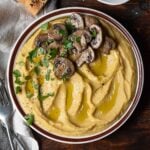
Greek Fava (Yellow Split Pea Recipe)
This healthy yellow split pea recipe is known as Fava in Greece. In most households it's served as a main dish but in Greek taverns it's usually served as a dip or spread next to seafood such as octopus or stewed cuttlefish.
Servings: 5 servings
Calories: 473kcal
Ingredients
For the Greek Fava:
- 5 tablespoons extra virgin olive oil 2 tablespoon for toasting and 2 tablespoon for drizzling at the end.
- 2 ¾ cups yellow split peas
- 1 onion chopped or grated
- 1 carrot grated
- 1 ¼ teaspoon fine salt
- Freshly grated black pepper to taste
- 2 bay leaves
- 5 cups water
- ½ teaspoon thyme or dried oregano or cumin
- Extra olive oil for serving
For the sauteed mushrooms:
- 2 tablespoon olive oil
- 1 pound button mushrooms (or your favorite kind), sliced
- 1 teaspoon thyme
- 1 garlic clove whole
- Fresh chopped parsley for garnish
Instructions
- Transfer the yellow split peas to a large sieve, rinse very well with water and drain.Chop or grate the onion and the carrot.
- In a large, deep pot, add the oil and the yellow split peas and toast over medium/high heat for 7-10 minutes, stirring constantly until the peas start to smell nutty and sweet.
- Add the onion and the carrot and continue stirring for 5 minutes until the onion is translucent and glossy.
- Add the salt, the black pepper, the bay leaves, the water and the thyme and bring to a boil.
- When it starts to boil, cover the pot with a lid, reduce the heat to a very slow simmer and cook for 50 minutes.Don't stir the fava during cooking, especially towards the end, because it will stuck at the bottom of the pot.
- While the fava is cooking, heat a skillet on high heat, add the olive oil, the mushrooms, the salt, the pepper, the thyme and the garlic clove.Cook for 8-10 minutes, stirring occasionally, until browned and fragrant. Remove from heat and keep warm.
- After 50 minutes the fava should have softened and look mushy. If you feel it needs more time cooking, add a splash of hot water if necessary. When ready, remove from heat and blend with an immersion blender until creamy (a food processor will also do, also see note #2). Taste and adjust the seasonings.
- Serve with the sauteed mushrooms, a generous drizzle of olive oil and fresh, chopped parsley (alternatively you can serve it with caramelized red onions and capers).
Video
Notes
Note #1: During cooking, you may need to add some more water.
Note #2: If you don't have a food processor or immersion blender, you can let the fava cook a little longer over very low heat until very soft and mushy. The you can puree it with a fork. This is how my grandma used to make it. Just keep in mind to cook it over very low heat otherwise it will stick on the bottom of the pot and burn.
Note #3: This recipe yields 5 servings as a main dish and 8 or more servings as an appetizer or side.
Note #4: Greek fava can be eaten warm or cold. When cold it will be thicker. If you have any leftover and want to eat it the next day you can reheat it in the microwaves or in the oven. If you want it less thick, you can thin it out using a splash of water.
Note #5: Freshly squeezed lemon juice and black olives or capers are also standard additions.
Nutrition
Calories: 473kcal | Carbohydrates: 55g | Protein: 21g | Fat: 21g | Saturated Fat: 3g | Polyunsaturated Fat: 2g | Monounsaturated Fat: 14g | Sodium: 674mg | Potassium: 366mg | Fiber: 15g | Sugar: 6g | Vitamin A: 2070IU | Vitamin C: 5mg | Calcium: 67mg | Iron: 3mg
