
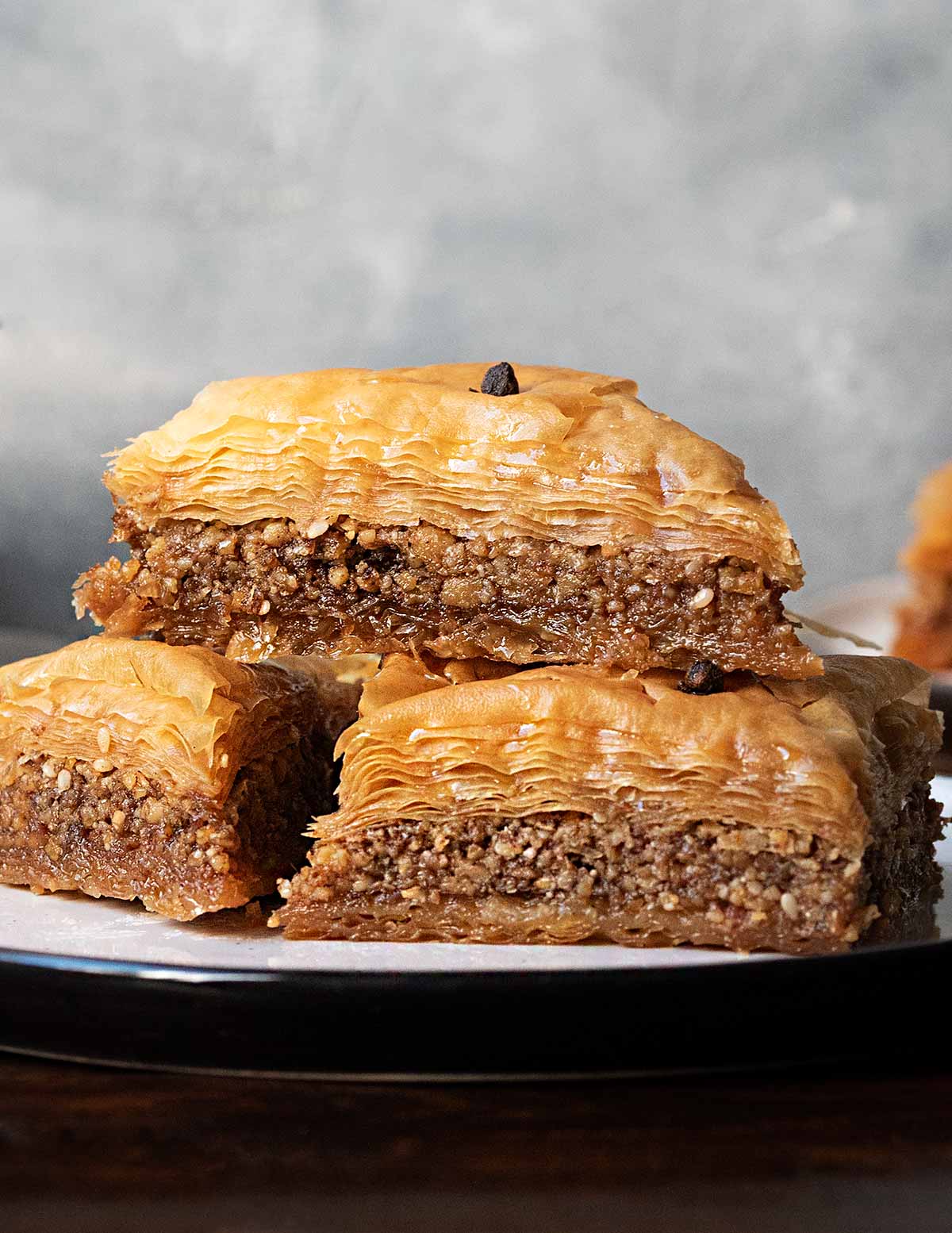
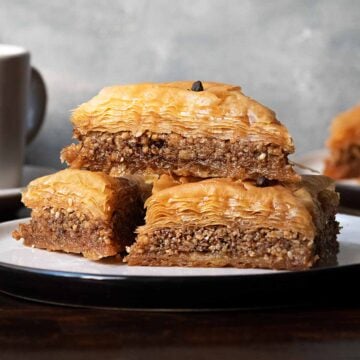
Follow all my foolproof tips and learn how to make the best homemade baklava every time - it's so easy! This traditional Greek baklava recipe with walnuts and honey is the perfect dessert for any occasion.
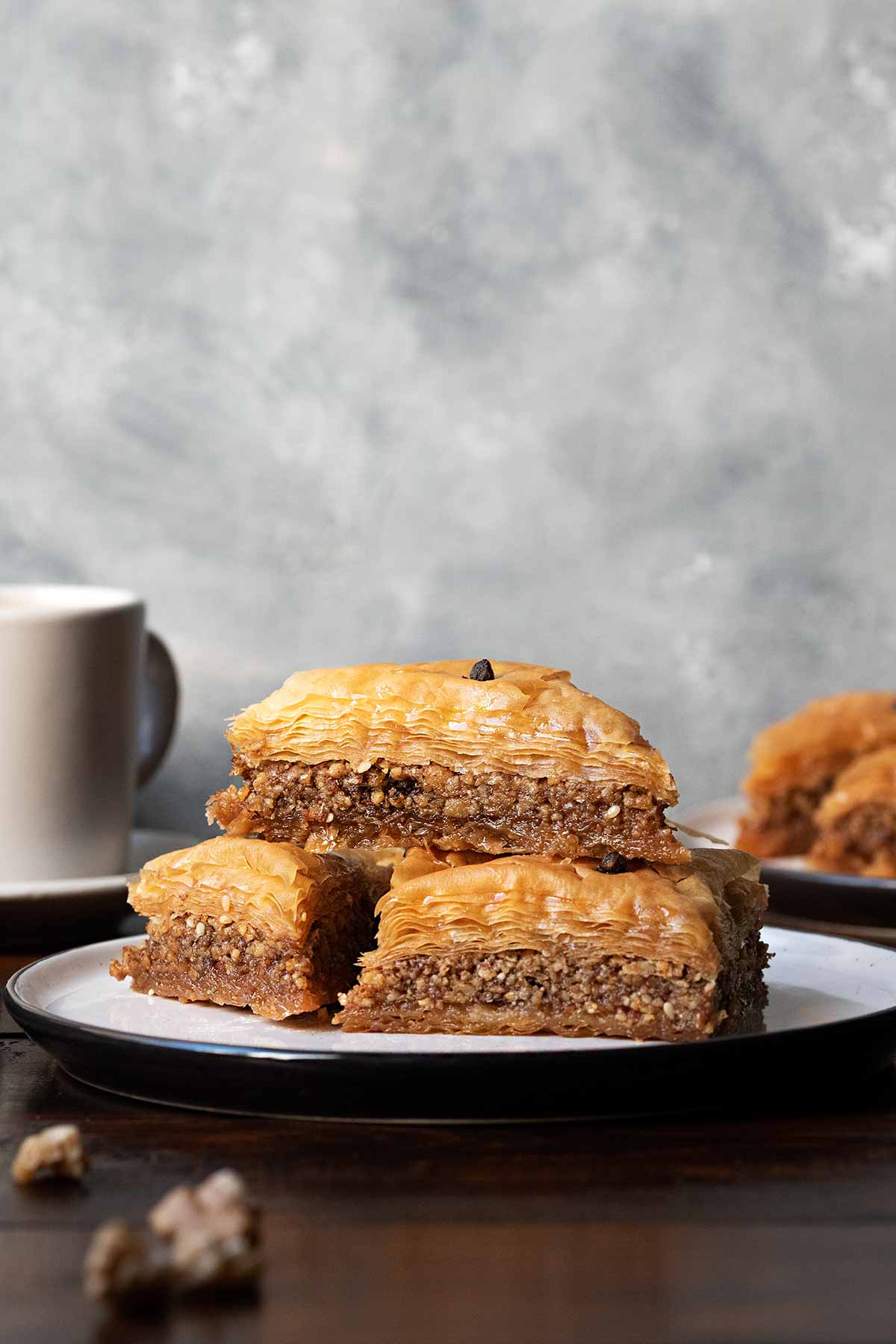
What makes Greek baklava different is the use of walnuts (Turkish baklava is made with pistachios) and also the use of spices, such as cinnamon and cloves.
And though you can certainly make it with your own homemade phyllo dough recipe, it's a lot easier and very quick when made with store-bought phyllo which, in most cases, is a lot thinner (almost transparent) than the homemade.
For a vegan baklava version, please give these olive oil baklava rolls a try, but make sure to also check my other dessert recipes and especially this Portokalopita - Greek orange syrup cake with phyllo which has a triple orange flavor, and this Galaktoboureko Recipe (Greek Custard Dessert).
✏️ Did you know?
The origin of baklava is claimed by Turkey, Greece and other Middle Eastern countries.
In the Deipnosophistae (external link) which is an early 3rd-century AD work by the Greek author Athenaeus, there is a reference about an ancient Greek dessert, made by the Minoan people of Crete, which consisted of two layers of dough and a filling made with ground walnuts, almonds and hazelnuts mixed with dried fruit and honey.
This recipe, as with many other foods, was later passed to the Turkish people who transformed it into today's baklava. After this very brief history of baklava, I would argue that this famous dessert was invented by the Greeks but the Turks refined it and made it the dessert we all know today.
📋 Greek Baklava Ingredients
For this traditional Greek dessert you'll need the following ingredients:

Butter: For the best results clarified butter or ghee is suggested. The authentic baklava recipe is made with sheep and goat butter (in Greece it is the kind sold in glass jars and it's already clarified).
Phyllo pastry (or filo dough): Extra thin phyllo pastry is suggested (this is almost transparent and has approximately 15-16 sheets per pound). Thicker types of phyllo (about 12 sheets per pound) will also work just fine.
Sesame seeds: If you don't like sesame use almonds or just omit them.
Brown sugar: It's not traditionally used, but it pairs heavenly with the ground cinnamon and the cloves so I urge you to try it. You can use dark or light brown sugar.
✏️ Tip: A small quantity of freshly squeezed lemon juice is used to prevent the crystallization of the syrup. For the same purpose you can instead use 2-3 tablespoons of glucose.
Orange peel is used to flavor the honey syrup. For a stronger orange flavor, add the zest from 1 orange in the filling. Alternatively, you can also add some orange blossom water to the syrup.
🥣 Variations
Layers: In most Greek pastry shops, baklava has one thick layer of ground nut filling between the layers of phyllo. That's why it's so easy: first you stack half of the phyllo sheets, then add the nut mixture and then add the rest of the phyllo. However, there are also recipes that have more layers of filling with 2-3 sheets of phyllo between them. Any way you make it it will be delicious.
Other nuts: Instead of walnuts you can make baklava with almonds, hazelnuts, or a mix of your favorite nuts.
Turkish baklava: It's made with ground pistachios and no cinnamon or cloves. Some rose water or orangle blossom water may be used instead. If you like pistachios, don't miss this chocolate pistachio cake with crunchy kataifi pastry, inspired by the viral Dubai chocolate bar.
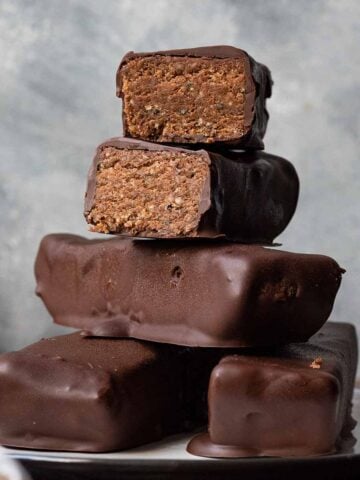
Chocolate baklava: For a chocolate version, add 10.6 oz (300 grams) finely chopped dark chocolate to the filling.
Baklava rolls (Saragli): These are sheets of phyllo sprinkled with ground nuts and rolled to form a "sausage". They're usually cut into 2-inch pieces.
🔪 Baklava Instructions
Learn how to make this easy Greek baklava with walnuts and honey by following this simple step-by-step guide:
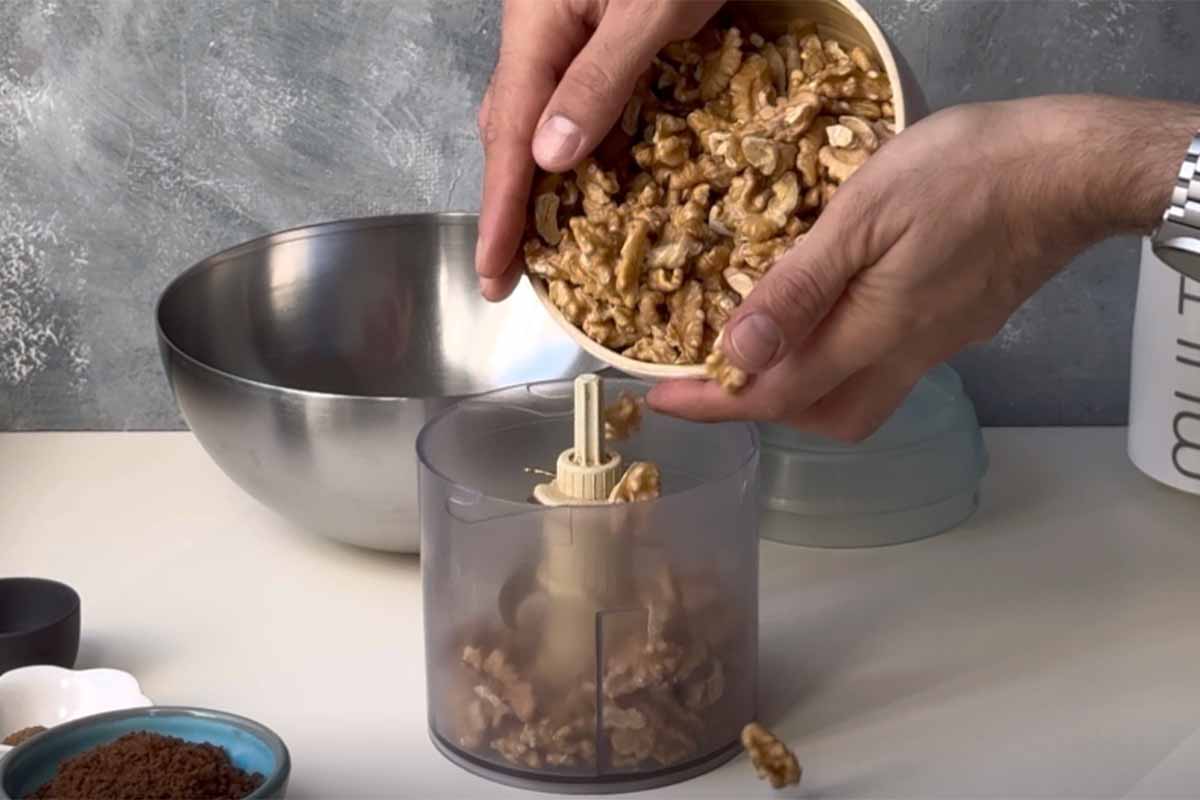
1. First, grind the nuts into fine bits.
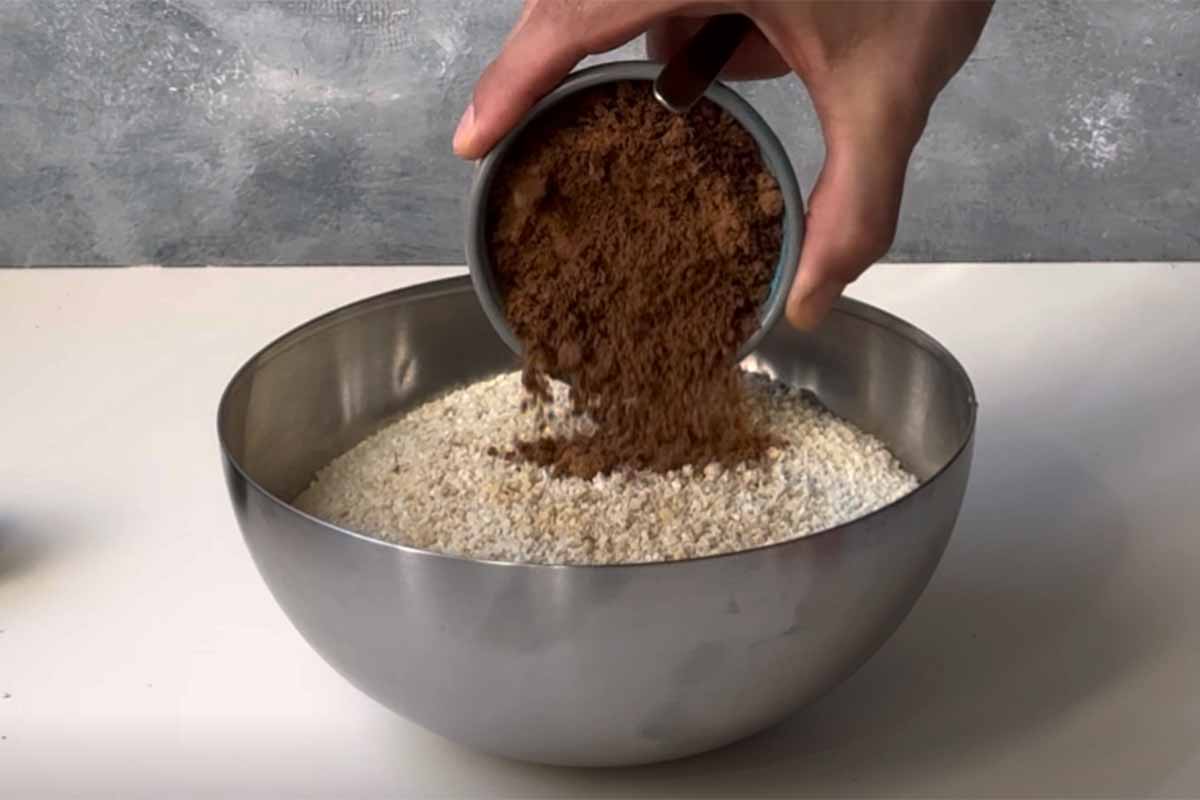
2. Transfer the nuts to a medium bowl. Combine the brown sugar with the cinnamon and the cloves and add them to nut mixture. Stir well to combine.
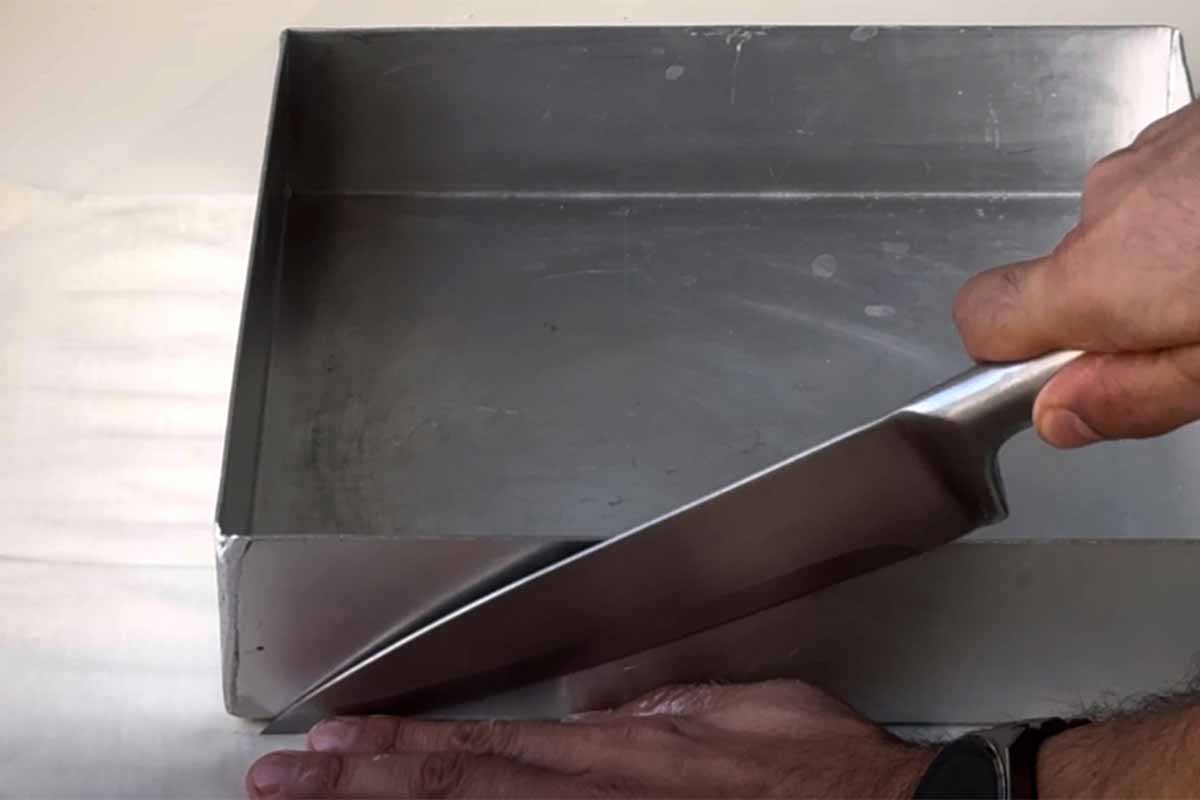
3. Transfer the sheets of phyllo dough to your working surface and place your baking dish on top. Cut the phyllo according to the size of your pan. Don't throw away the scraps, you will use those too.
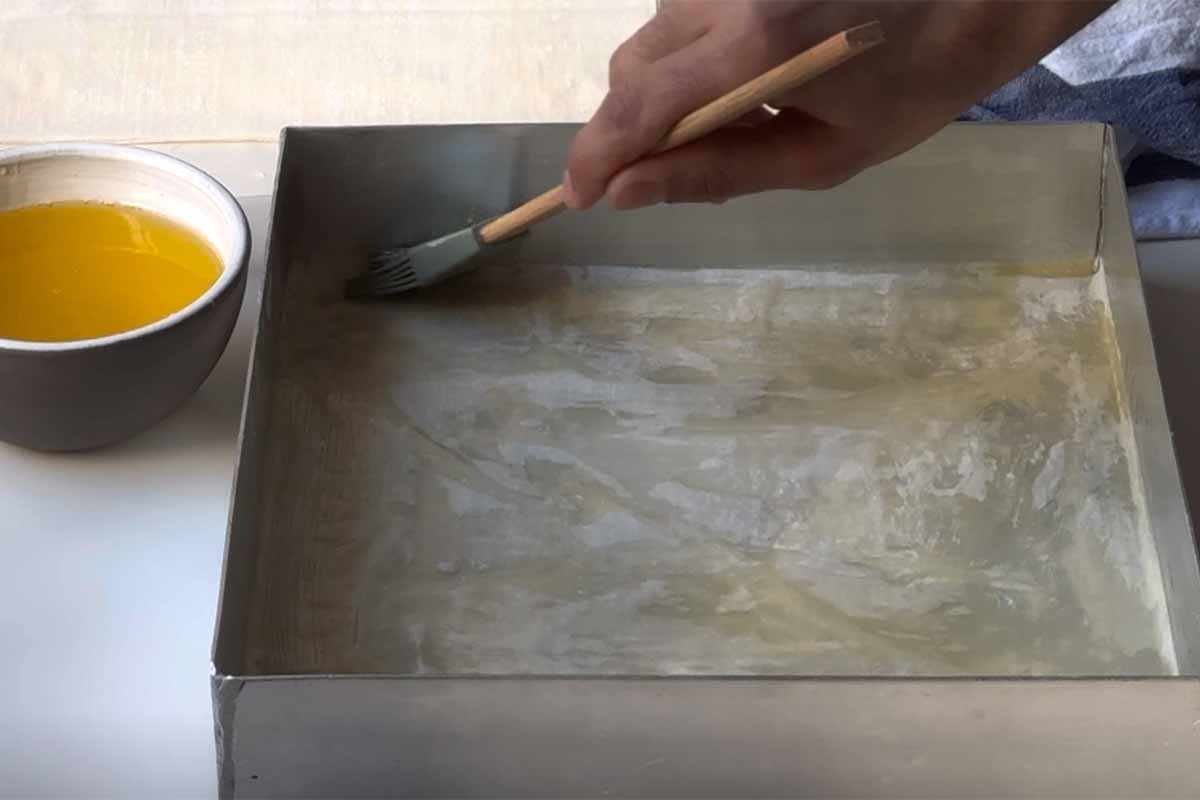
4. Divide the phyllo sheets and the scraps into two and cover them with a damp towel to protect them from drying out. Brush the baking pan with butter and start layering the first half of the phyllo sheets into the pan, making sure you brush each sheet with melted butter. Start with the large sheets (those that are the size of the pan) and continue with the scraps, trying to cover the surface of the pan evenly.
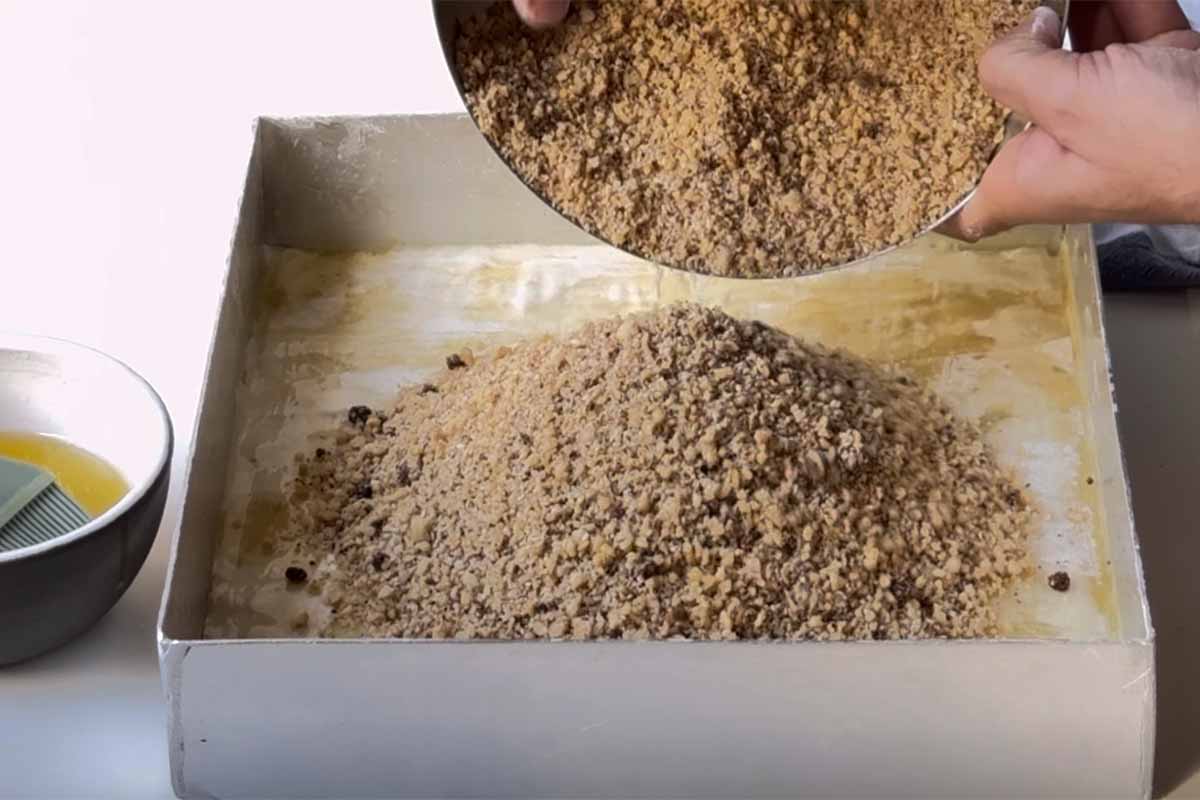
5. Add the ground nut filling to the pan, level it with the back of a spoon and press it gently to compact.
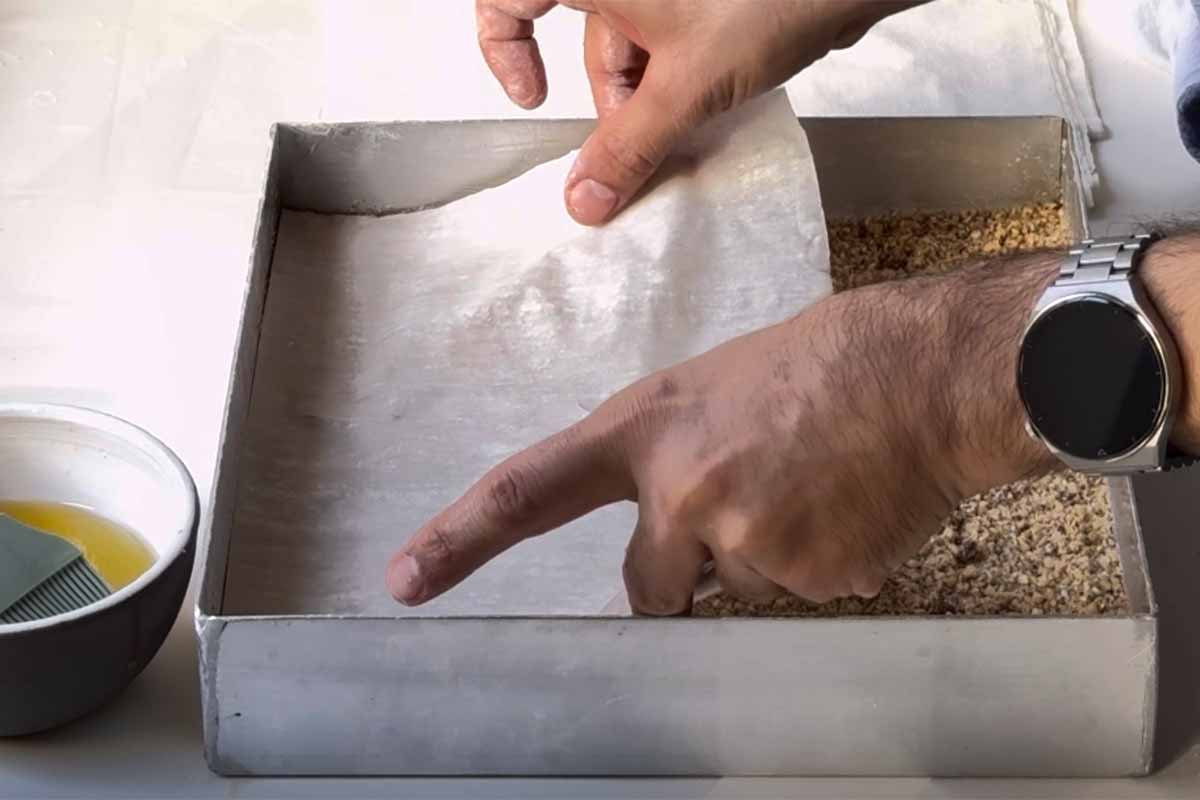
6. Continue with the top layer. This time start with the phyllo scraps and end with the large sheets (this way you'll get a smooth surface). Remember to brush each sheet with melted butter.
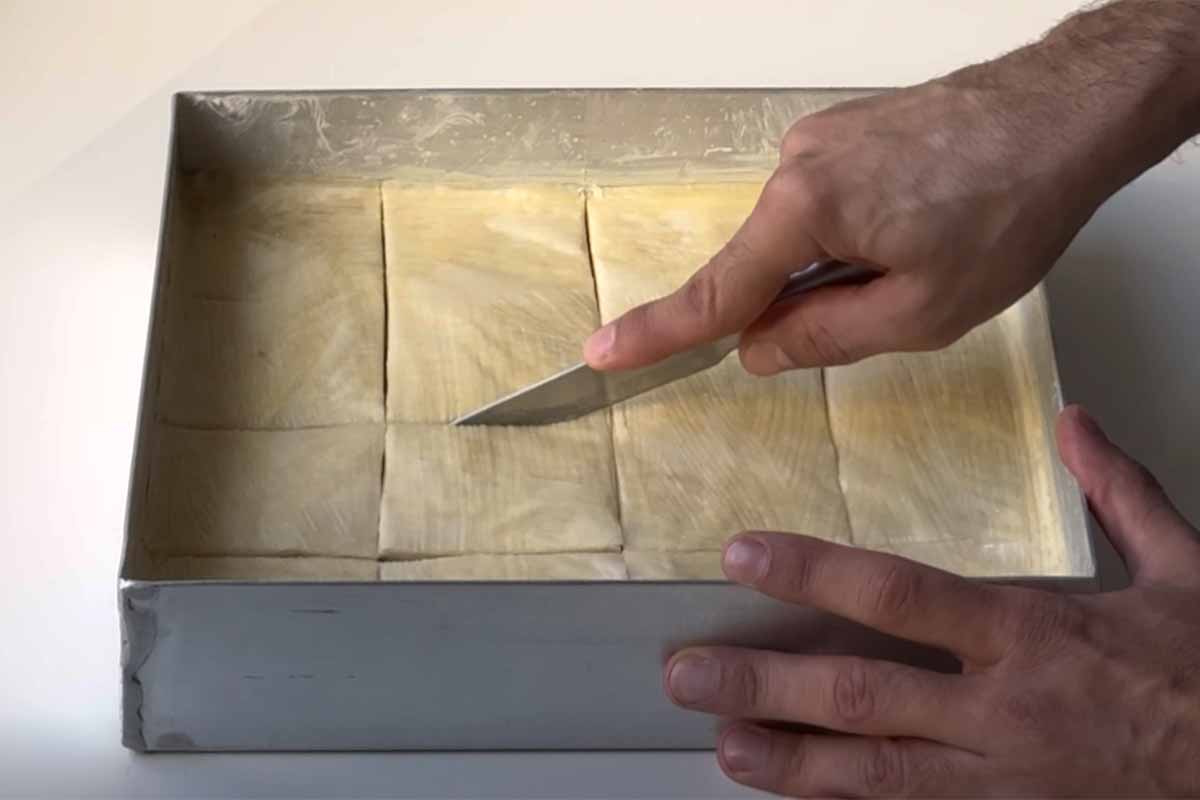
7. Transfer the pan to the fridge for 10 minutes. Then, cut the baklava into small pieces with a sharp knife. I usually cut it in small squares or triangles, but diamond shapes are also nice.
Bake the baklava in a preheated oven until golden brown.
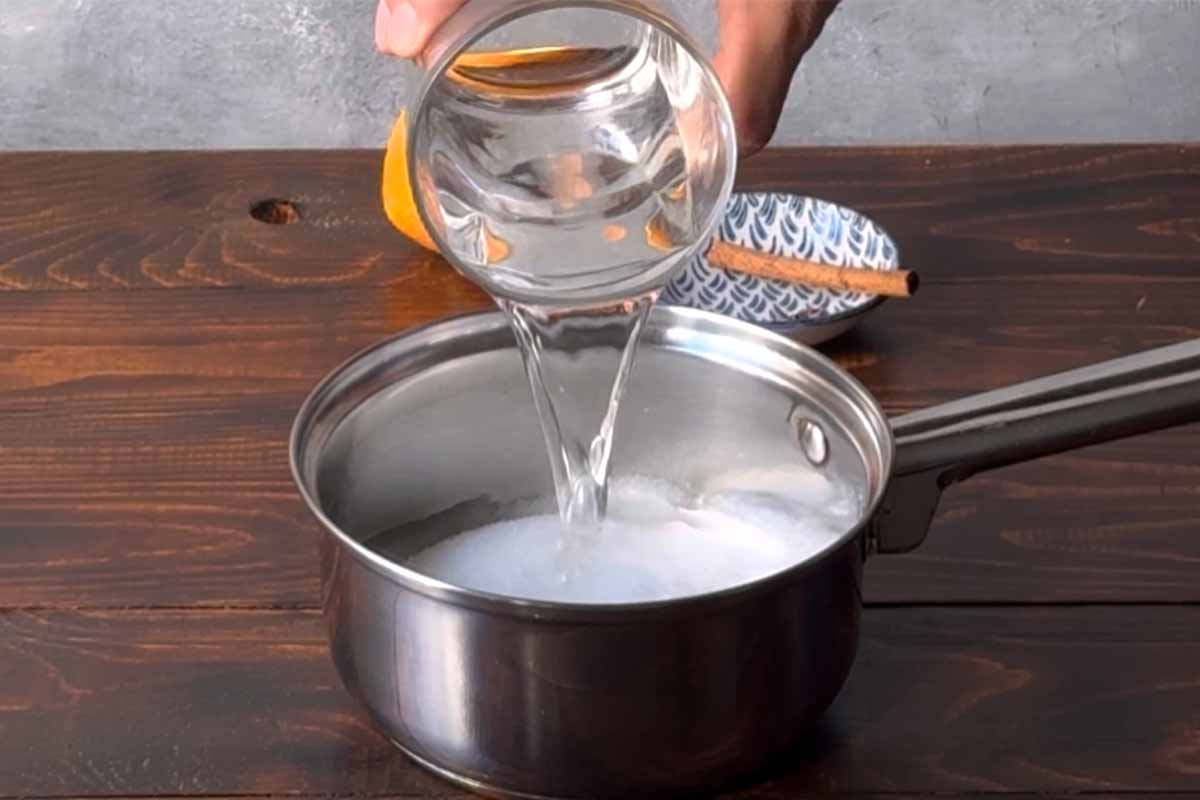
8. Transfer the ingredients for the syrup to a saucepan and bring to a boil. Boil for 3 minutes.
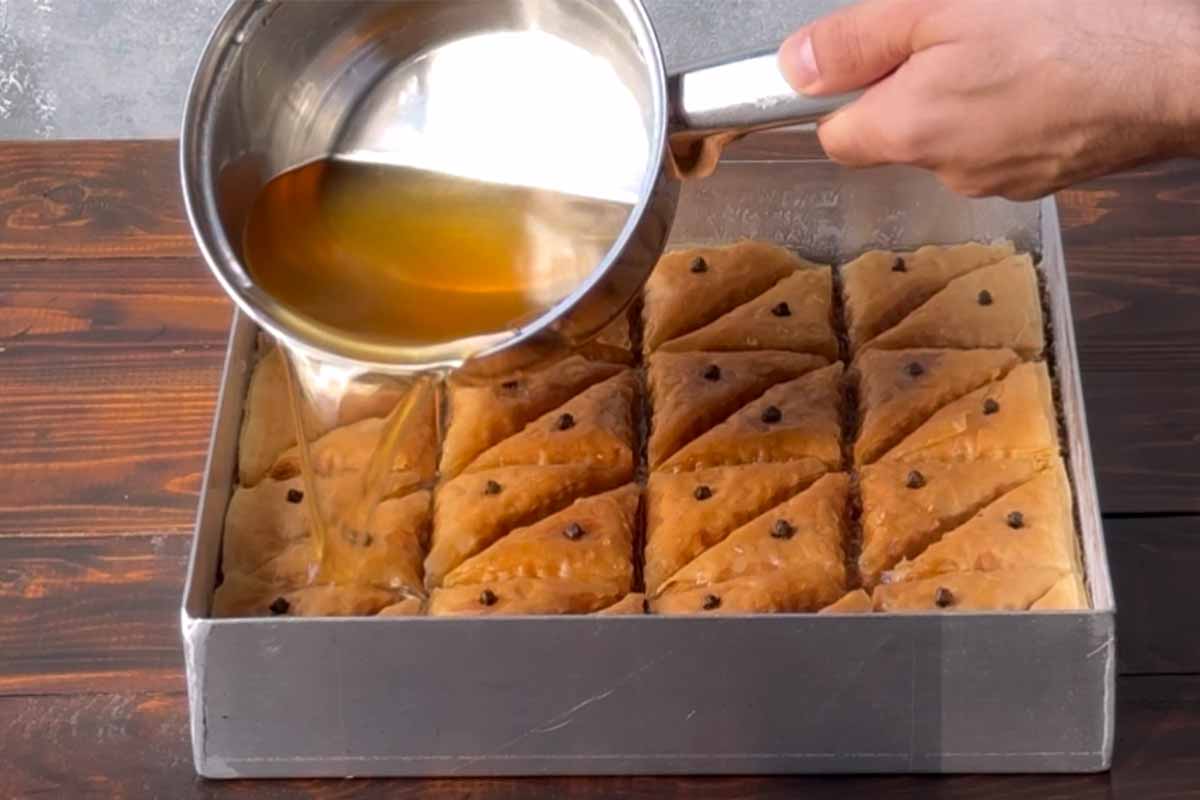
9. Pour the hot syrup over the hot baklava and let it cool to room temperature before serving.
Serving and Pairings
Serve it plain or with this no-churn homemade vanilla ice cream. Another great option is this real pistachio ice cream. The best pairing is with a cup of Greek coffee or, if it's summer, with an espresso freddo (Greek iced coffee). If you don't drink coffee, try it with a cup of Greek mountain tea (tsai tou vounou).
👨🍳 Expert Tips
✤ When working with phyllo dough, cover it with a damp towel to prevent it from drying out.
✤ Chill the baklava before scoring the phyllo. The butter will solidify and the scoring will be easier.
✤ Baklava needs to be baked at a low temperature for a long time. This way all the phyllo layers will bake evenly.
✤ Hot syrup - hot baklava. Pour the hot syrup immediately after you take the baklava out of the oven. This helps for more water to evaporate from the syrup making the dessert more crunchy. Also the syrup penetrates through all the layers more easily.
✤ Don't store in the fridge because it will absorb moisture. For the same reason don't store this dessert in an airtight container. Keep the lid semi-opened to let it breathe.
💭 FAQs
Greek and Persian baklava both share the concept of layered pastry with nuts and syrup, but they differ in ingredients, flavors, and sometimes in presentation. Here's a closer look at the differences:
Nuts: Greek Baklava is often made with walnuts or a mixture of walnuts and almonds while Persian Baklava usually incorporates pistachios.
Flavorings: In Greece it is typically flavored with honey and spiced with cinnamon and sometimes cloves. Persian Baklava (external link) is often flavored with rosewater or orange blossom water, which gives it a lighter, floral essence. It can also include cardamom.
Syrup: The Greek variation has a thicker honey-based syrup, which makes the baklava richer and slightly denser. The Persian variation has less syrup which is also lighter.
Both are equally delicious! If you love fall flavors and desserts such as this pumpkin pie recipe with condensed milk, then you'll adore the Greek Baklava because it has a complex, warm and sweet flavor. If you prefer more pure and less complex flavors or if you love pistachios, then Turkish Baklava is for you. I personally advise you to try both of them. And remember, nothing stops you from filling half the baklava with pistachios and the other half with the walnut filling!
🍳 More Greek Desserts



If you tried this easy Greek Baklava recipe or any other recipe on my website, please leave a 🌟 star rating and let me know how it went in the 📝 comments below. I love hearing from you!
🎥Recipe Video
📖 Recipe
Easy Greek Baklava Recipe with Walnuts and Honey
Ingredients
For the baklava:
- 1 package (450 g) phyllo dough (as thin as possible)
- 1 cup (220 g) clarified butter
- 3 ½ cups (400 g) walnuts (finely ground)
- ⅓ cup (50 g) sesame seeds (almonds or hazelnuts, optional)
- ¼ cup (50 g) dark brown sugar (or light brown)
- 1 teaspoon ground cinnamon
- ¼ teaspoon ground cloves
- ¼ teaspoon salt
For the syrup:
- 2 cups (375 g) sugar ( *scant cups)
- 1 ¼ cups (300 g) water
- ⅓ cup (120 g) honey (thyme honey if possible)
- 1 cinnamon stick
- 3 cloves
- 2 teaspoons lemon juice
- 1 orange the peel
Decoration (optional)
- 32 cloves
Instructions
- First, grind the nuts into fine bits.✏️ Tip: To achieve even sized bits, I suggest grinding them in small batches, and if you use different nuts, grind them separately because depending on their toughness some need more time than others.
- Transfer the nuts to a medium bowl. Combine the brown sugar with the cinnamon and the cloves and add them to nut mixture. Stir well to combine.
- Cut the phyllo pastry. Transfer the sheets of phyllo dough onto a level surface and place your baking dish on top. Cut the phyllo the size of your pan. Don't throw away the scraps, you will use those too.
- Divide the phyllo sheets and the scraps into two and cover them with a damp towel to protect them from drying out. Brush the baking pan with butter and start layering half of the phyllo sheets into the pan, making sure you brush each sheet with melted butter. Once you're done with the whole sheets, continue with half the scraps, trying to cover the surface of the pan evenly.
- Filling: Add the ground nut filling to the pan, level it with the back of a spoon and press it gently to compact.
- Top layer: Continue with the rest of the phyllo, but this time start with the phyllo scraps and end with the whole sheets (those which are the size of the baking dish). Remember to brush each sheet with melted butter.Preheat your oven (top and bottom heat) to 350°F (175°C).
- Once you're done, transfer the pan to the fridge for 10 minutes or until the butter is cold and has solidified. Then, using a very sharp knife, cut the baklava into small pieces. There are many ways you can do that, I usually cut it in small squares or triangles. Optionally, stick a whole clove in the middle of each piece.
- Bake in the preheated oven for 20 minutes, then lower the temperature to 320°F (160°C) and bake for 80 minutes more or until golden brown. If by any chance you notice the surface to brown very quickly, cover the pan with a piece of aluminum foil.✏️ Note: baking at a lower temperature for longer time ensures that all the layers of phyllo will bake to perfection.
- Transfer the sugar, the water, the orange peel, the cinnamon stick and the cloves to a saucepan and bring to a boil. Boil for 3 minutes, remove from the heat and add the honey. Stir well to combine.Note: You can add the honey form the start, I just prefer not cooking it.
- Pour the hot syrup over the hot baklava, immediately after you take it out of the oven. Let it cool to room temperature before serving. It tastes even better the next day!
Notes
- Square 11x11 inches (28x28 cm)
- Round cake pan 12 inches (30 cm) in diameter
- Rectangular 13x9 inches (33x23 cm)


Cynthia says
Thank you so much for sharing this recipe!
Any chance you might have recommendations for a dairy free version?
With what can we substitute the butter?
Makos says
Hi Cynthia, I have made this with olive oil and it was just as good! I believe it will also work with a vegan butter or margarine but I haven’t tried it myself.
Cynthia says
Hi Makos!
Oh my that wonderful news!
Especially for those with dairy allergies!!
I’m guessing the olive oil might need to be mild tasting…do you have any recommendations?
Thanks again!
Makos says
Unfortunately I don’t have any recommendations for the olive oil. You can use any extra virgin olive oil you prefer. If you find the taste too intense you can also use half olive oil and half a neutral tasting vegetable oil (such as corn oil)”. Hope that helps!
Cynthia says
Thank you so much!!
Mary says
That was the best baklava I've made! I really like that you don't boil the honey, I don't know if it's just my idea but it tasted better. Thanks Makos!
Makos says
Hi Mary, thank you so much for your kind words!
George says
Thanks for this recipe Makos! It was actually much easier than I thought, and it came out delicious 🙂
Filomila Andrianaki says
Thank you, I tried the Turkish baklava with pistachios because I have eaten this in Istanbul, and I made it, thanks to your instructions. I used the half quantity of butter mixed with olive oil, but the most important was that I baked for the time you recommend exactly. And your tip for the temperatures worked amazing . The baked baklava was perfect.
Thank you very much
Makos says
Hi Filomila, that’s great! Thanks for sharing this 😊
Pat says
I ran out of the nut mixture after 6 layers. I think you should post how many layers and how many spoons you should use to make this recipe successful. Right now it is not even an inch high? I will make more nut mixture to complete it and I have about 9 sheets left in the package! Hope it turns out as this is an expensive recipe!
Makos says
Hi Pat, this recipe uses one filling layer only, meaning that all the nut mixture goes in the middle. You won’t add nuts between every phyllo sheet.
Please read the instructions again or watch the video and let me know if you have any other questions.
I believe your baklava will still turn out great!