
Once you learn how to make this Greek barley rusk recipe (paximadi kritiko) you'll never go back! Originating in Crete, these healthy rusks will bring a Mediterranean vibe to your table. Use them to make Dakos salad, add them to your Greek salad (Horiatiki) or just briefly soak them with water and enjoy them as a healthy snack with a drizzle of extra virgin olive oil and a pinch of sea salt flakes.

I have to say that I've seen recipes using way too much wheat flour and just a small percentage of barley flour because barley is more difficult to bake with, plus it makes the breads denser. However, if you want to call these barley rusks they should be at least 50% barley flour, shouldn't they? Otherwise, they're just wheat rusks with a bit of barley flour.
In Crete, we make these rusks (we call them paximadia) in two different shapes.
The first way is to shape the dough into long loaves, bake it and then slice it into thick slices which get baked for a second time until they dry out completely and become rusks. These rusks are called Dakos.
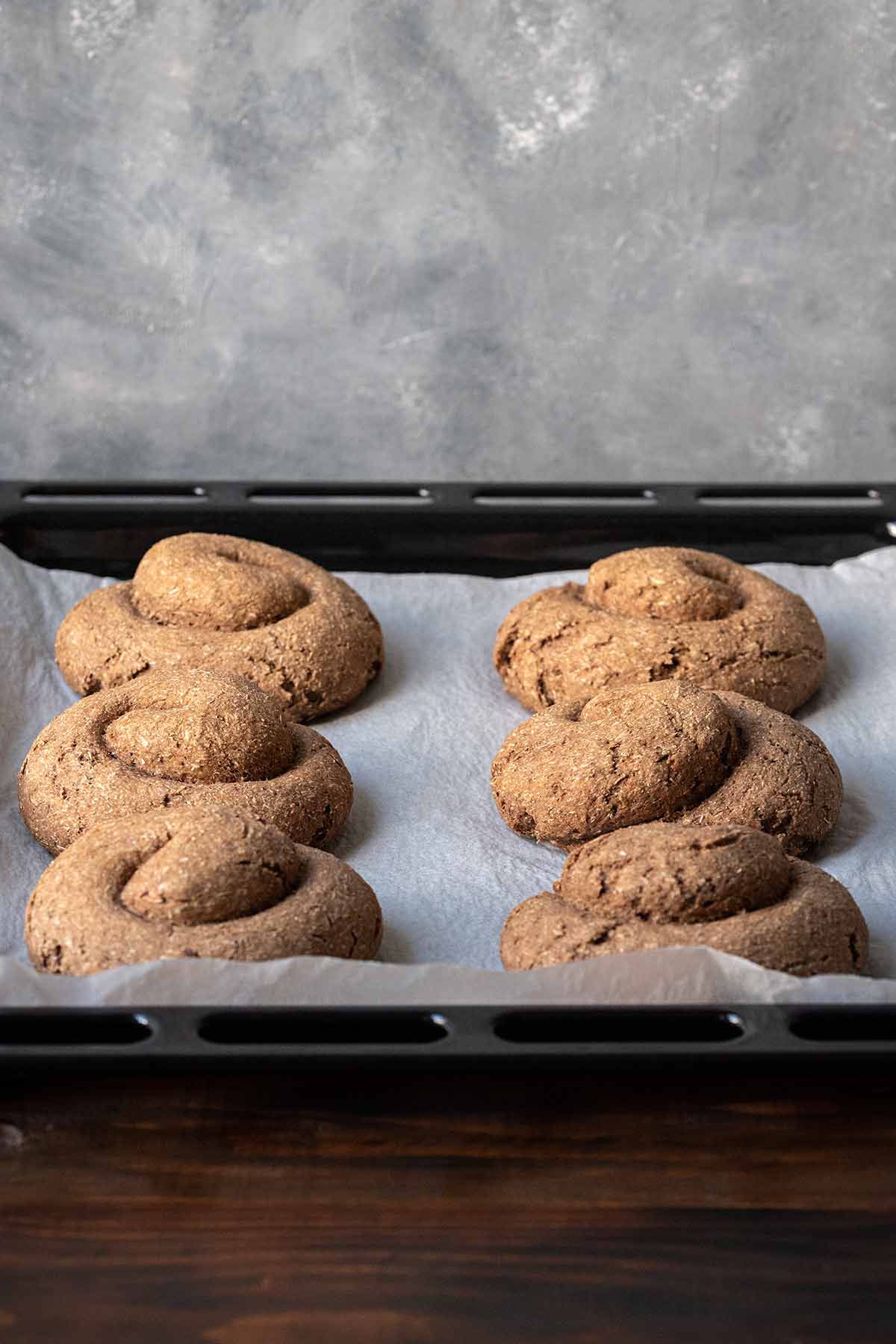
The second way is to shape small round spirals, bake them, slice them in the middle and bake them for a second time until dry. These rusks are called kritharokouloura (the plural is kritharokouloures).
Check my other bread recipes, and if you especially love Greek cuisine, make sure to try this Greek village bread (Horiatiko psomi) and this aromatic and slightly sweet Greek ceremonial bread (Artos).
😍 Why I love these Rusks
✓ Perfect texture in salads. When added in salads the rusks soften but they don't get mushy.
✓ Delicious: Barley has a unique taste that gives depth and earthy undertones to baked goods.
✓ Healthy and filling: Full of fiber and rich in protein.
According to www.health.harvard.edu, barley contains about three times as much fiber as oats and is particularly rich beta glucan, a type of fiber with cholesterol-lowering abilities. Barley is also a good or excellent source of several vitamins and minerals.
📋 Dakos Rusks Ingredients
To make the authentic Greek barley rusks recipe, you'll need the following ingredients:
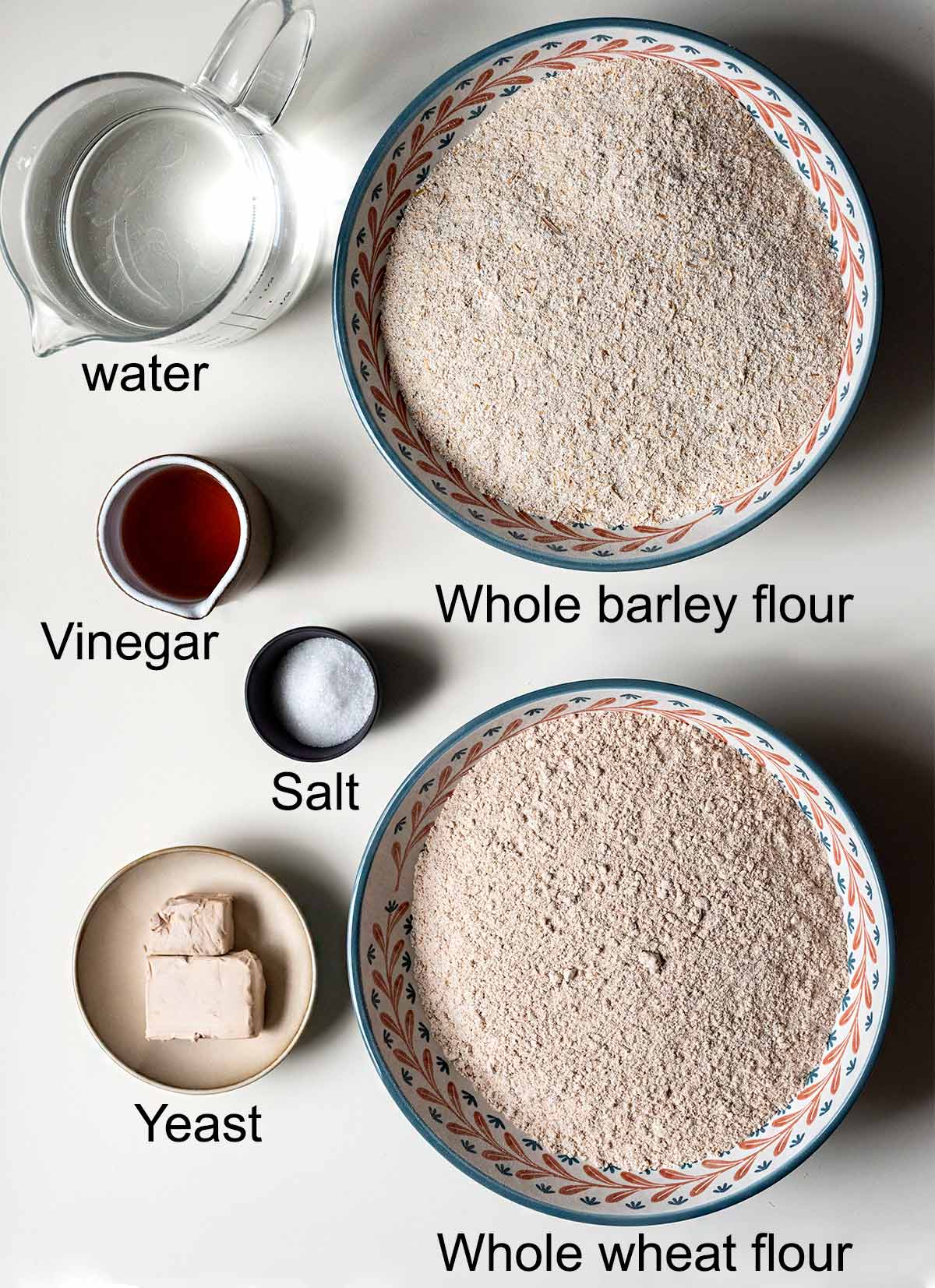
Whole or integral barley flour. For the authentic Cretan Dakos recipe the barley flour should be unhulled. This means that the flour contains the both the hull and the bran of the barley. Having said that, hulled, whole barley flour will also work.
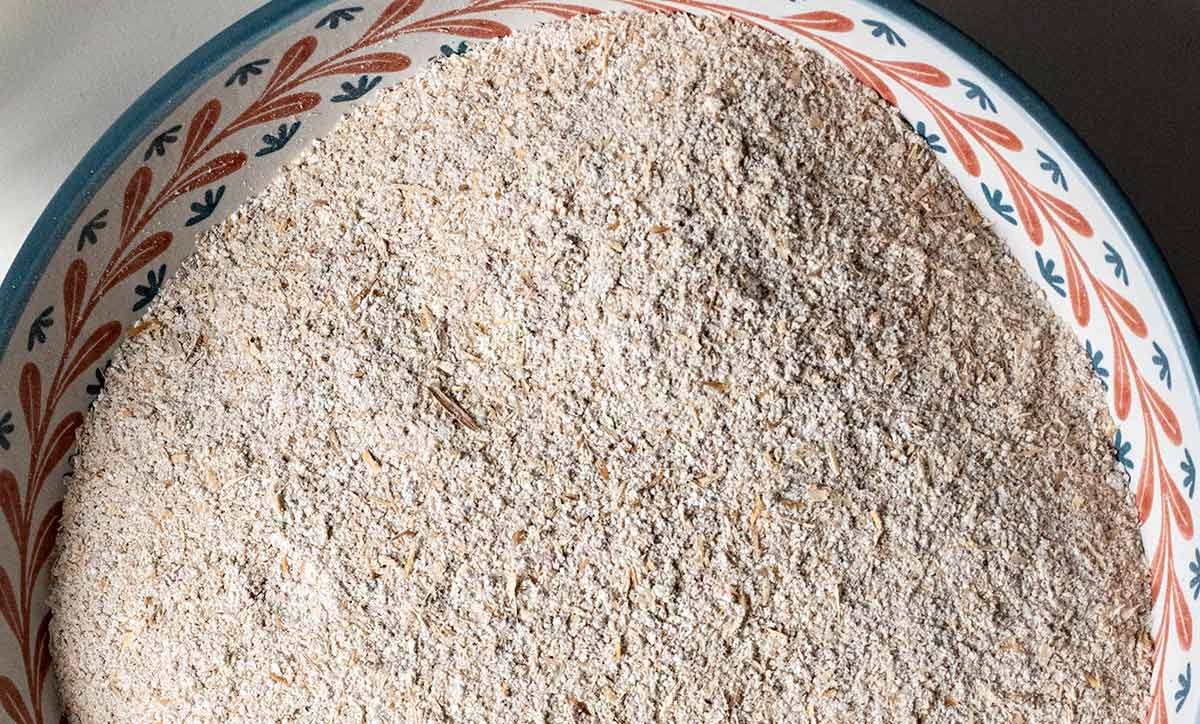
Close image of unhulled barley flour
Water. If the water where you live is highly chlorinated I suggest using bottled water.
Vinegar. Wine vinegar or apple cider vinegar is both fine.
Fresh yeast. If you can't find fresh yeast there are instructions in the recipe card at the end of this post for how to replace it with dry yeast.
For the complete list with ingredients and quantities see the recipe card at the end of the post.
🔪 How to Make Barley Rusks
How to make the traditional Dakos rusk recipe. Just follow this easy step by step guide:
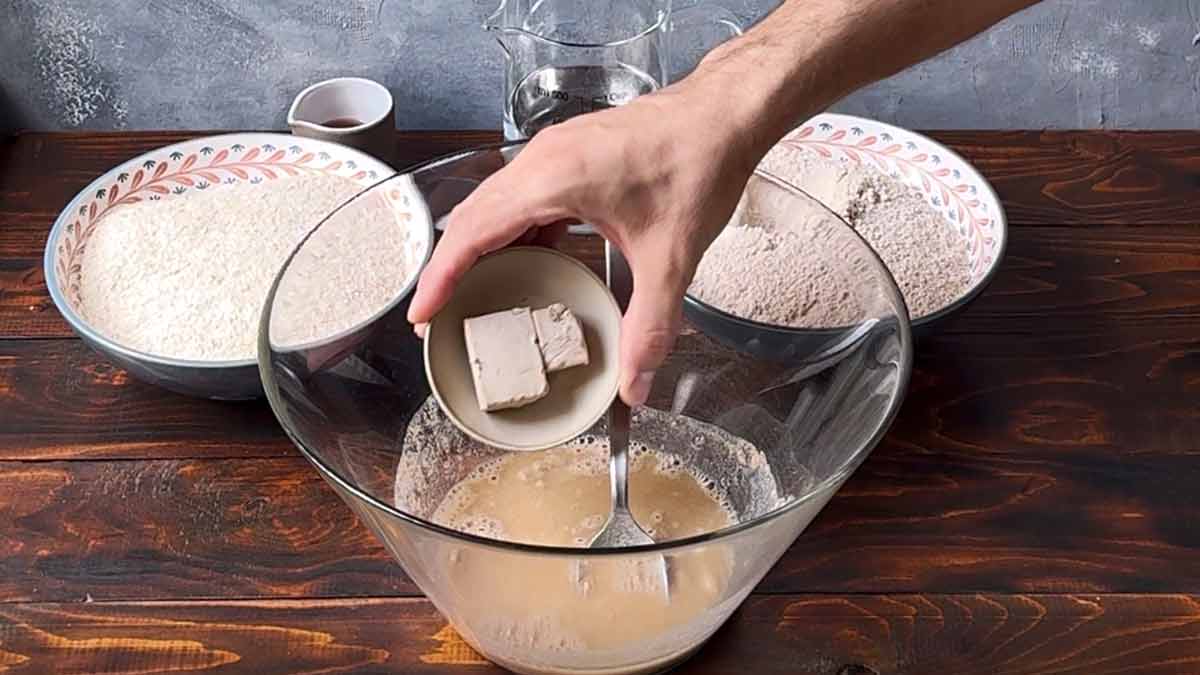
1. Dissolve the yeast in the water and wait until it foams. Add a couple of tablespoons from the flour, to give the yeast something to eat.
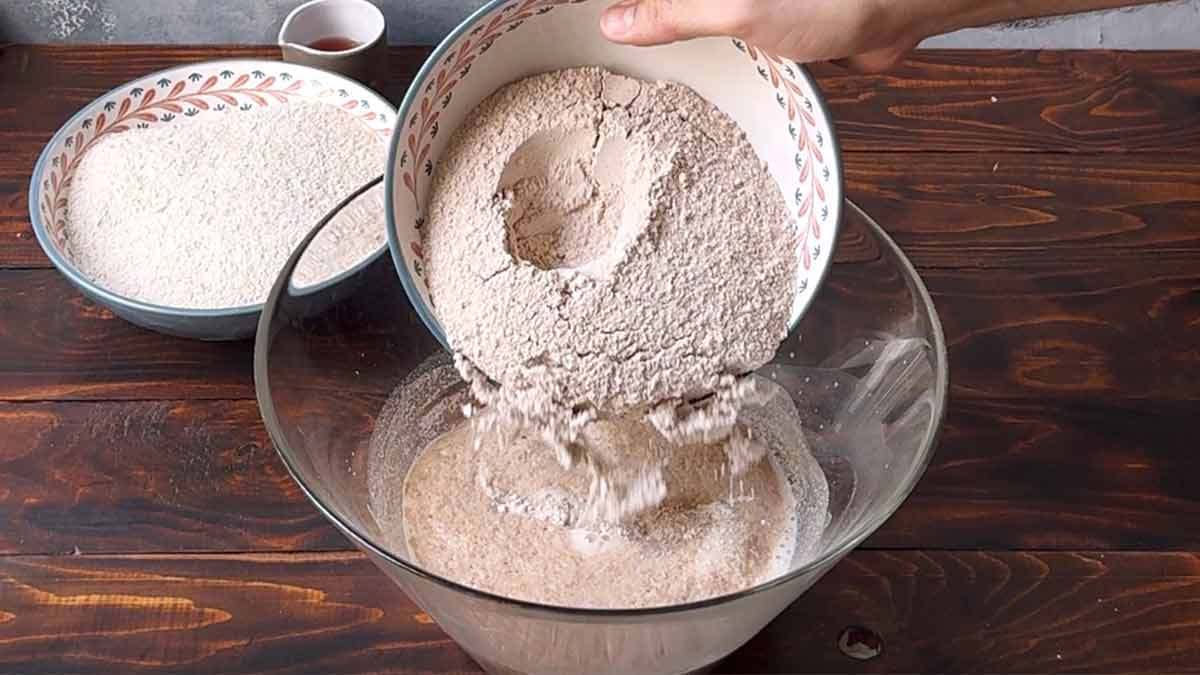
2. Add the flours and the rest of the ingredients to the yeast mixture and mix with a wooden spoon.
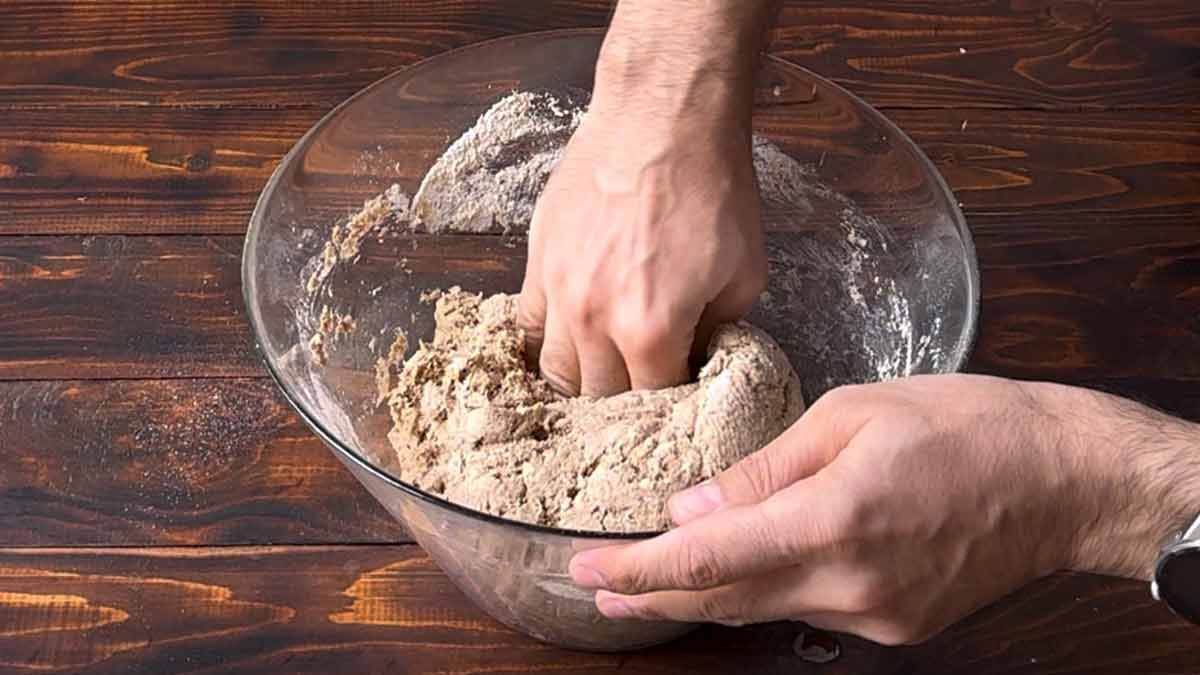
3. Once the dough starts to form, knead with your hands until all the flour is absorbed. Let the dough rise in a warm place until it has doubled in volume.
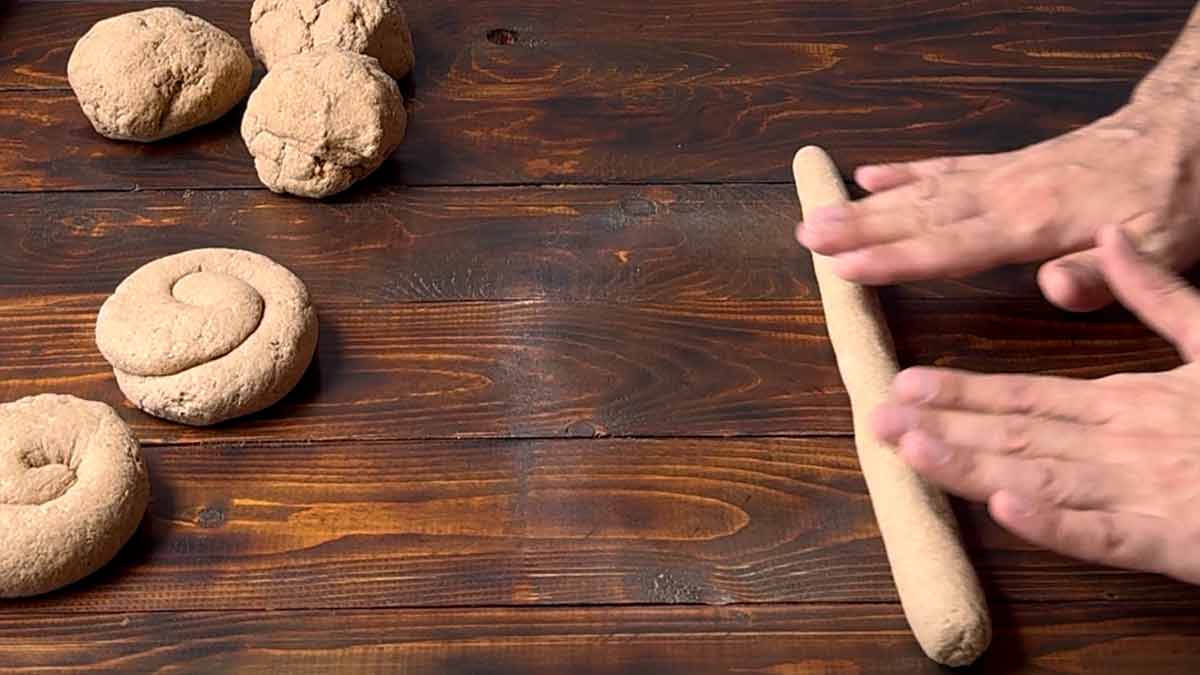
4. Divide the dough into 6 balls, and knead each ball until smooth. Then, form thick strings and shape them into spirals.
✏️ Tuck each edge under the spiral, to help it hold its' shape during baking.
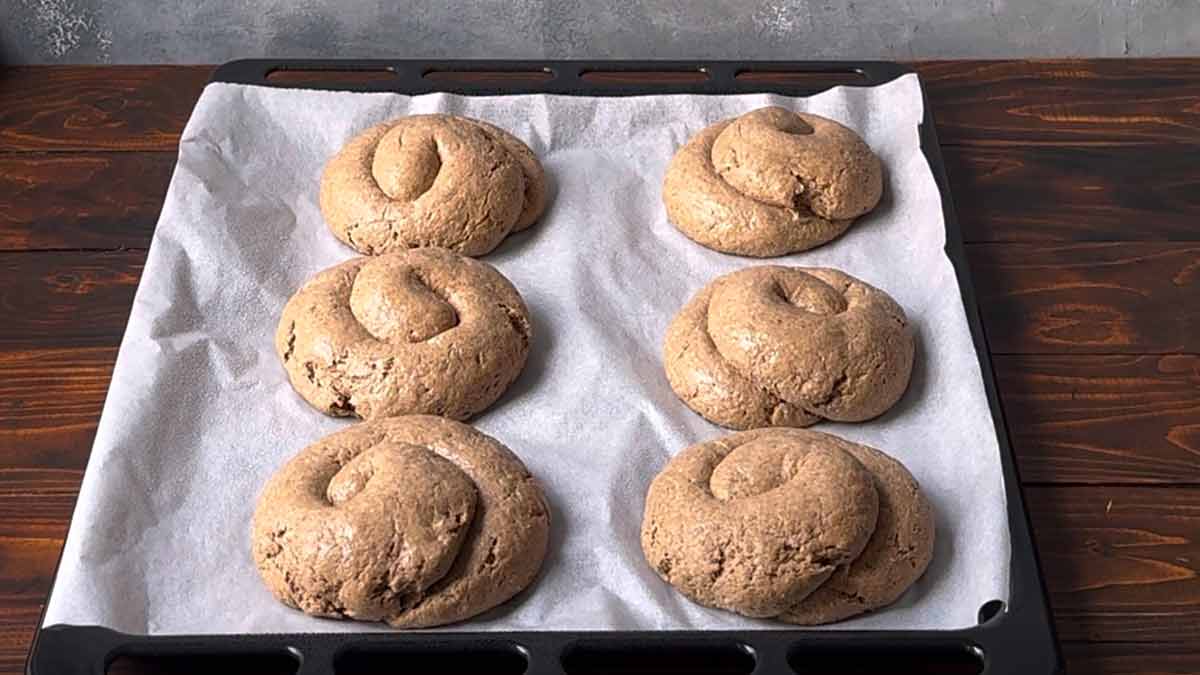
5. Cover the spirals with a dump cloth and let them double in size. Then bake in a preheated oven.
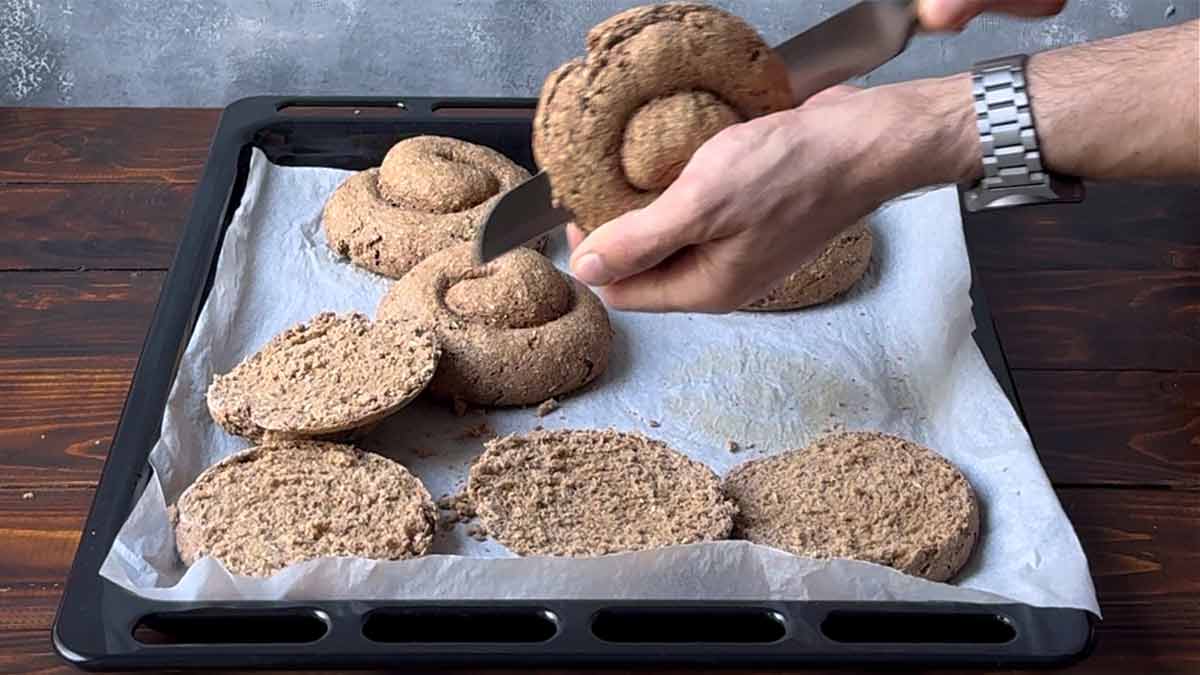
6. Once the breads are baked, let them cool and then cut them in the middle with a serrated knife.
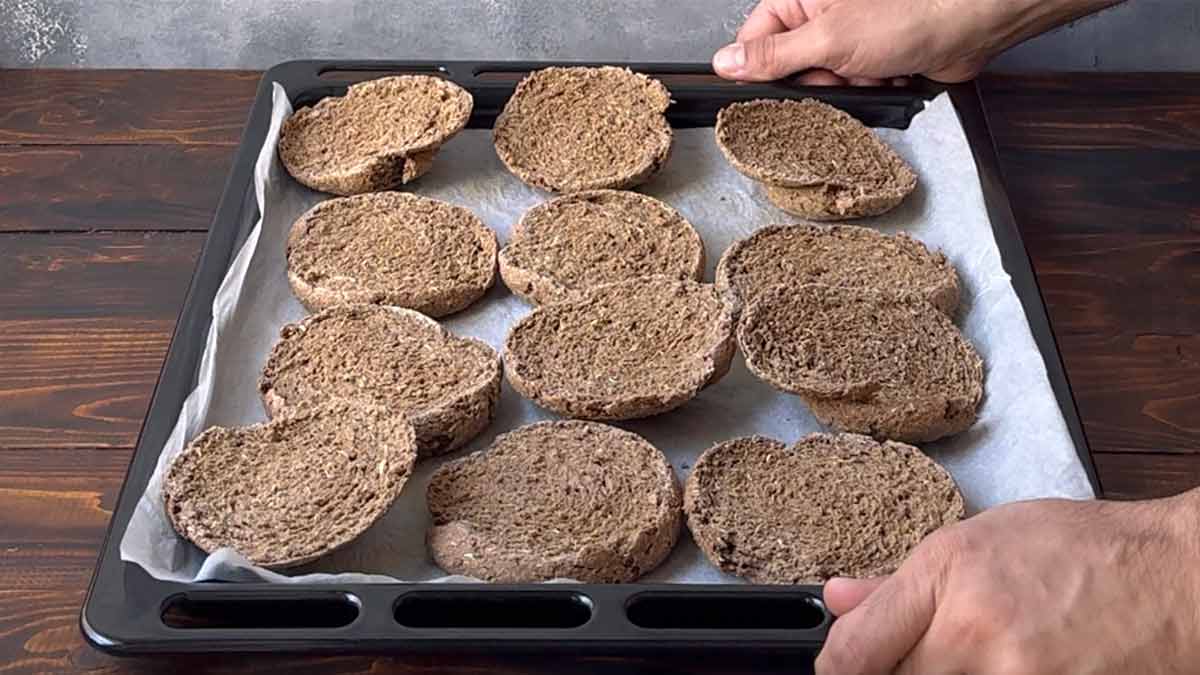
7. Bake for a second time until completely dry, let them cool completely and store in an airtight container.
How to eat Dakos Rusks
Traditional Cretan Dakos is very tough. That's why it is submerged for 2-3 seconds in a bowl filled with cold water and then served with plenty of extra virgin olive oil and a pinch of coarse sea salt. You can also add grated tomato, xinomizithra (a fresh cheese with sour taste), olives and oregano. This Dakos with xinomizithra is a popular Greek dish called koukouvagia in some places. Instead of xinomizithra, feta cheese can also be used!
👨🍳 Expert Tips
✤ Choose a barley flour high in protein (mine is 13% protein).
✤ If possible, for the authentic Cretan Dakos, choose an un-hulled barley flour. Your best chance to find that is from a local mill.
✤ If you want your rusks to be less hard, add 2-3 tablespoons of olive oil to the dough.
✤ After a few days, if you notice that the rusks are not completely dry, you can repeat the drying process for a second time. This will help them last for months.
💭 FAQs
Dakos is a type of rusk made in Crete. The bread is made using whole barley flour and whole wheat flour, and once it's baked it's sliced and then baked for a second time until it is completely dry. This procedure helps it last for several months.
When completely dry, Cretan rusks will last for up to 6 months, when stored in a cool, dry place, inside an airtight container. If the rusks are not completely dry they can get moldy. If you're not sure if your rusks are completely dry, you can bake them again for a third time.
🍳 Similar Recipes You'll Love


If you tried this Greek Barley Rusks recipe (Dakos) or any other recipe on my website, please leave a 🌟 star rating and let me know how it went in the 📝 comments below. I love hearing from you!
🎥Recipe Video
📖 Recipe

Greek Barley Rusks Recipe (Cretan Dakos)
Ingredients
- 2 ¾ cups (350 g) whole barley flour (preferably unhulled (see note #1))
- 2 ¾ cups (350 g) whole wheat flour
- 2 cups (480 g) water
- 35 grams fresh yeast (see note #2 for dry yeast)
- 2 Tablespoons (30 g) vinegar
- 2 ¼ teaspoon (12 g) fine sea salt
- Optional:
- 2 tablespoons olive oil (see note #3)
- 1 tablespoon gluten powder (optional, see note #4)
Instructions
- In a large bowl, mix a couple tablespoons of flour with the water, add the yeast and dissolve it with your hands. Then, wait until it foams (10-15 minutes).
- Add the flours, the vinegar, and the salt to the yeast mixture and mix with a wooden spoon.
- Once the dough starts to form, knead with your hands until all the flour is absorbed. Cover the bowl with a wet towel and let the dough rise in a warm place until it has doubled in vollume.
- Once the dough has doubled in volume, divide it into 6 equal balls (if you double the recipe divide it into 12), and knead each ball until smooth. Then, form thick strings and shape them into spirals. Tuck each edge under the spiral, to help it hold its' shape during baking.
- Place the spirals on a baking dish lined with parchment paper, cover them with a dump cloth and let them almost double in size.
- Preheat your oven at 355°F (180°C).
- When the breads are double the size, bake them for 50 minutes.
- Take them out of the oven and let them cool on a rack. Then cut them in the middle with a serated knife.
- Arrange them in a single layer on the baking dish and bake them for a second time (at 230°F /110°C) until completely dry (about 2 hours). Let them cool completely and store in an airtight container.



Maria says
Hey Makos, I'm so happy I found this recipe! I was searching for it because I visited Crete a while ago and these traditional barley rusks were delicious!
Makos says
Thank you Maria, I'm very happy you found this recipe too!
Jules says
Hey Makos,
Thank you so much for the recipe! I'll definitely try it out.
One question: I had barley rusks in my Greek salad during my last trip Crete and they've been very dark, almost black, but not burned at all. Is that a different recipe? Yours look a bit lighter in color compared to the ones I had. Any idea if there's a difference?
However, I am super excited to try these out and thank you again for the recipe 🙂
Best,
Jules
Makos says
Hi Jules,
If they were almost black they may have had some carob flour also, it’s common in Crete. Do you remember if they had any chocolate notes?
Jules says
Hey Makos,
Oh you are absolutely right! That were carob rusks! Genius! Thank you very much :-))
...I'll still try these ones 😉
Debbie Kalaichakis says
My Husband said better than the one from Crete so must be a good recipe. Very easy to follow instructions 👍🏼
Makos says
Thanks so much Debbie!
Norbert says
Hi, the rusk made out of this recipe are delicious! And the recipe worked right the first time :-). Thank you so much for keep sharing your fantastic recipes!
Makos says
Hi Nobert!
I’m so happy you liked this recipe! These rusks are such an important part of Cretan culture, and it brings me so much joy knowing that people far away can enjoy a little taste of Crete.