
Are you searching for a traditional Greek revani recipe just like your grandma used to make? This foolproof, flavor-packed Greek semolina cake with syrup comes with many tested tips to help you nail it every time. The result? A moist, fluffy, orange-kissed Ravani cake that never disappoints. Forget soggy bottoms, dry bites, or bland flavor-this is the Greek syrup cake of your dreams.
👉 Tip: Make revani a day ahead so the syrup has time to soak in evenly.

What Is Revani Cake?
Revani (or ravani) is a traditional Greek cake made with semolina flour and soaked in a sweet, citrusy syrup. It's a classic in many Mediterranean homes. It's certainly one of the most famous Greek cakes but it also pops up in variations across Turkey, Egypt, and the Middle East.
What makes it special?
The texture. Fine semolina gives revani a light, slightly coarse crumb that holds up beautifully to syrup. This isn't your average fluffy sponge cake. It's a semolina cake with character.
For more delicious Greek desserts don't miss this easy Greek baklava with walnuts (one of my favorite desserts ever!), this Galaktoboureko recipe (milk custard dessert) and another Greek favorite, the Portokalopita: Greek Orange Syrup Cake with Phyllo 🍊🍰.
📋 Ingredients
To make this easy revani cake recipe you'll need the following ingredients:
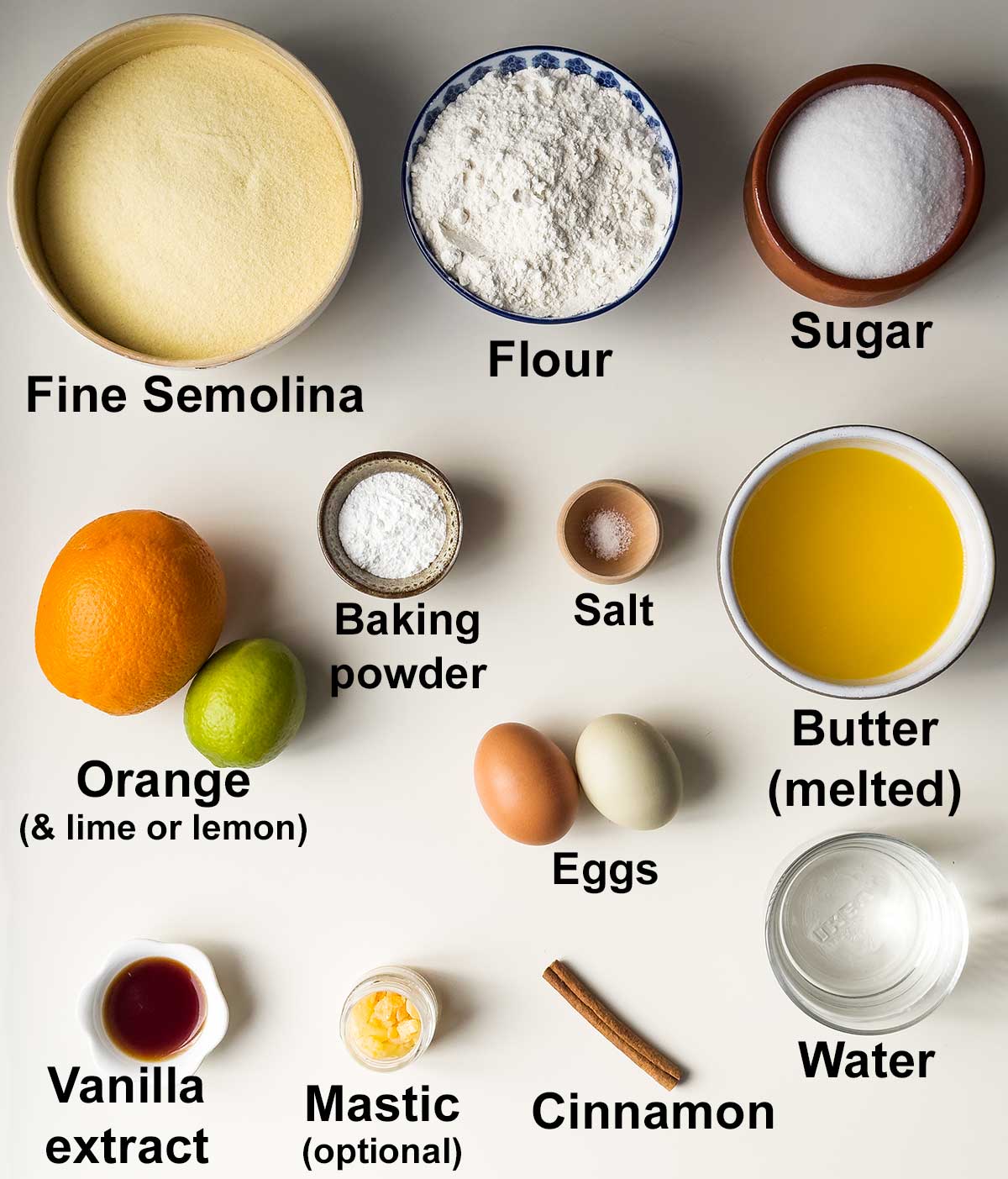
Citrus zest: Most of the times I use orange zest, but lemon or a blend of orange, lemon and lime can be used. Adapt this to your liking and even omit the zest completely if you want to make vanilla the star.
Vanilla extract. You can also use vanillin (in Greece it comes in small white capsules)
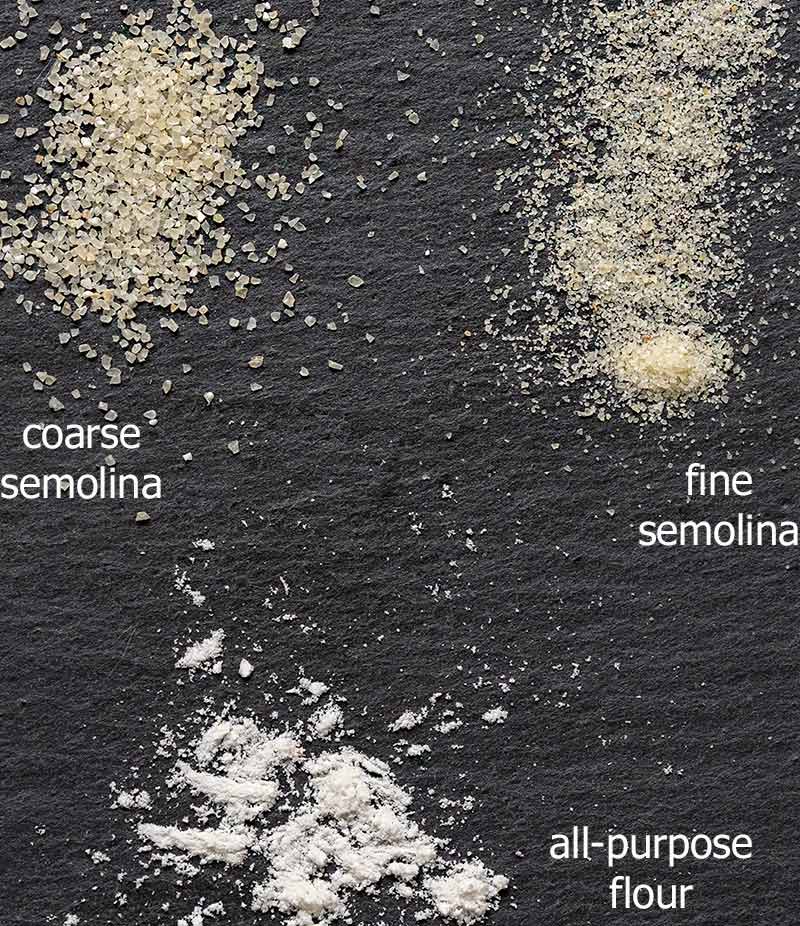
Fine semolina. In Greece we have fine semolina and coarse semolina. Coarse is used in another dessert called Samali.
⚠️ To make Revani you should use fine semolina and not coarse. See image below for the difference in size:
Optional:
Orange blossom water (or rose water). If you happen to have in your cupboard a bottle of orange blossom water, I highly advise you to add a couple tablesoons to the syrup.
Mastic for the cake: Mastic (↗️ wikipedia link) will give a distinctive mediterranean character to this dessert, and also pairs very well with the orange - lemon aroma. However, after testing this revani recipe with and without it, I suggest to omit it if you want the citrus flavor to be the star.
Desiccated coconut: It's often used for sprinkling the surface of the Ravani cake.
🔪 How to Make Revani
This is a short guide for how to make this Greek semolina cake with syrup. For the detailed instructions with step-by-step-photos, please see the recipe card ⬇️ at the end of this post.
1. Make the syrup: Add the sugar, water, orange peel and cinnamon to a pot or saucepan and boil for 5 minutes.
2. Whip the eggs: In a large bowl, whisk together the eggs and sugar until light and fluffy.
3. Make the cake batter: Add the orange juice and butter and mix well. In a separate bowl, combine semolina, flour and baking powder and add the dry ingredients to the egg mixture. Fold until combined.
4. Bake: Pour the batter into a prepared pan and bake until the top is golden and a toothpick comes out clean.
5. Add the syrup
Once the Revani is out of the oven, let it cool for about 10 minutes. Then pour the syrup evenly over the cake. Let it rest for 3-4 hours or overnight for the syrup to distribute evenly. It's even better the next day.
Serving Tips
Revani is usually cut into diamonds or squares and served at room temperature or slightly chilled. It can be served plain or sprinkled with a thin layer of desiccated coconut. A cup of Greek coffee or a tall glass of espresso freddo is the perfect pairing.
A dollop of whipped cream, a scoop of vanilla ice cream, or a handful of crushed pistachios on top are also great ideas.
🔧 Troubleshooting
Revani should be light, yet rich and sweet but not cloyingly sweet. These are the most common reasons why your revani cake is going wrong and their fixes:
1. Texture Too Crumbly.
✅ Fix: Use a mix of flour and fine semolina. Make sure the semolina you're using is not coarse because it affects the cake's cohesiveness. Also, let the cake batter rest in the pan before baking to give semolina time to absorb the liquids.
2. Dense Cake: This could be due to incorrect ingredient ratios or not whipping the eggs adequetely.
✅ Fix: Use a kitchen scale and measure by weight. Warm the eggs in a bowl filled with hot water (not too hot - you don't want to cook them) and then whip them until tripled in volume. They should look like shaving foam.
3. Mushy Revani
✅ Add cooled syrup to warm cake. If the syrup is hot it will mess with the texture. Also, too much syrup can cause the cake to become mushy.
4. Dry Top or Soggy Bottom (or Both)
✅ Fix: Use the right size pan. Revani cake should not be too tall, as this can affect the distribution of the syrup. Also too much syrup or a syrup that's not thick enough, can lead to syrup accumulating at the bottom creating a soggy bottom and a dry top.
5. Syrup Not Absorbing
✅ Fix: Temperature matters. Pour cooled syrup over a warm revani cake gradually. Let the first ladles soak before adding the rest.
6. Lack of Distinct Flavor
✅ Fix: Measure the orange zest (or lemon zest if you prefer) and complement the aroma with vanilla extract or vanillin. Use orange peel and a cinnamon stick to flavor the syrup. Add ground mastic to the cake batter or orange blossom water to the syrup (after boiling) for an incomparable Mediterranean taste.
7. Cake Sticking to the Pan
✅ Fix: Grease the pan very well and coat with semolina. Alternatively, you can line it with parchment paper but there's really no need if greasing is done properly.
🍳 More Greek Desserts to Try




This isn't just another semolina flour cake. This is the kind of dessert you make once and crave forever. If you tried this Revani cake recipe, please leave a 🌟 star rating and let me know how it went in the 📝 comments below. I love hearing from you!
🎥 Video
Music on Video: Chasing love, Musician: jiglr
📖 Recipe
Revani Recipe: Greek Semolina Cake with Syrup
Equipment
- One 12-inch (30cm) round cake pan (see note#1 for other sizes)
Ingredients
For the Syrup:
- 2 cups (480 g) water
- 2 ½ cups (500 g) granulated sugar
- 1 cinnamon stick (2 inches long)
- 2 pieces orange peel ( or lemon or lime)
- 1 teaspoon (5 g) lemon juice
- 4 teaspoons (20 g) orange blossom water (optional)
For the semolina cake:
- 1 cup (200 g) granulated sugar
- 4 teaspoons orange zest (or lemon, lime)
- ½ teaspoon mastic (ground, optional - see note#2)
- 1 pinch salt
- 2 teaspoon vanilla extract
- 4 large eggs (See note#3)
- ¾ cups (180 g) orange juice
- ¾ cups (170 g) melted butter
- 1 ⅔ cups (315 g) fine semolina
- 1 ½ cups (180 g) all-purpose flour
- 5 teaspoon (20 g) baking powder
- crushed pistachios or desiccated coconut ( for the surface - optional)
- Extra butter and semolina for greasing the baking pan (about 1 tablespoon each)
Instructions
- Add the sugar, water, cinnamon and orange peel and to a pot or saucepan and bring to a boil. Simmer for 5 minutes from the time it starts to boil. Take off the heat, add the lemon juice and the orange blossom water (if using) and set aside to cool.👉 The syrup should be cool when added to Revani. Make it first to give it time to cool down.

- Transfer the sugar, orange zest and mastic (if using) to a large mixing bowl and rub the mixture with your fingers. This releases the essential oils and makes the cake more fragrant.
- Add the salt, vanilla and eggs and whip the mixture with a hand mixer (or a stand mixer with the whisk attachment) until light and fluffy. It should triple in volume after 5-6 minutes.👉 The eggs whip much better when they're at room temperature or warm. Place them for a few minutes in a large bowl filled with warm water to raise their temperature (do this while prepping the rest of the ingredients).
- With the mixer running, add the orange juice and the melted butter and mix until well incorporated.
- In a separate bowl, combine the semolina, flour and baking powder and add the dry ingredients to the whipped egg mixture. Mix until combined and finish mixing using a rubber spatula. Make sure to scrape the bottom and sides of the bowl once or twice.
- Grease your baking pan with butter and coat with 1-2 tablespoons semolina. Pour the batter into the pan and preheat your oven to 350°F (175°C).👉 Let the cake batter rest while the oven is preheating. This gives time to the semolina to absorb the liquids.
- Bake for 30-35 minutes or until the top is golden brown and a toothpick comes out clean. Don't worry if you accidentally over-bake this cake, the syrup will make it moist.
- Once the Revani is out of the oven, let it cool for about 10 minutes (not longer). Then ladle/spoon the syrup gently and evenly over the cake.Cover with plastic wrap and let it rest for 3-4 hours or overnight for the syrup to distribute evenly. It's even better the next day.
- Optionally, sprinkle the Revani with desiccated coconut and slice into square or diamond shaped pieces. Can be served at room temperature or slightly chilled.








Notes
Two 8 or 9-inch (20 - 23 cm) round pans. If you halve the recipe use one of those pans. Note #2: Ground the mastic in a mortar with a tablespoon of the sugar until powder. *If you want the citrus flavor to shine, don't use mastic. Use only zest and vanilla. Note #3: If you have medium eggs, 4 large eggs ≈ 5 medium. About the syrup quantity: Ravani is meant to be sweet. But most recipes call for almost double the syrup, which (at least for me) makes it overly sweet and soggy. If you do prefer your Ravani drenched in syrup, feel free to add 1 more cup of water and 1 more cup of sugar to the syrup. That said, I’m confident that once you try the lighter way, you’ll never go back!
STORAGE:
Cover the Revani with plastic wrap or transfer to an airtight container and store for 3-4 days at room temperature or in the refrigerator for up to one week.More Greek Desserts:
Nutrition
💭 FAQs
Basbousa (↗️ wikipedia link) and Revani are both semolina-based syrup cakes, sweet, moist, and beloved across Mediterranean and Middle Eastern kitchens. They're often flavored with citrus, coconut, or floral waters and share that signature syrup soak that gives them their rich texture.
But they're not quite the same. Revani, common in Greek and Turkish cuisine, usually includes eggs and has a lighter, sponge-like texture with a strong orange flavor. Basbousa, rooted in Egyptian and Middle Eastern traditions, is denser, sometime eggless, and may contain ground almonds or coconut flakes in the batter.
Revani tastes like a soft, sweet cake with orange (or citrus) taste and a little texture from the semolina. It's moist (thanks to the syrup), but not heavy. Just the right kind of sweet. It's like a mix between a light sponge cake and a syrupy treat your grandma might've made. Simple, comforting, and really hard to stop eating.
So, is revani Greek or Turkish? Can anyone say for sure?
Revani has roots in both Greek and Turkish cuisine, and like many dishes from that region, its exact origin is shared, debated and claimed by multiple cultures.
In Greece, it's known as revani or ravani, and it's often flavored with orange and sometimes coconut. It's a staple at family gatherings, holidays, and Sunday lunches.
In Turkey, it's also called revani and has been around since the Ottoman Empire. The name itself is believed to come from a poet named Revani, or possibly from a celebration dessert created after an Ottoman military victory.
Across the Middle East and Balkans, you'll find similar revani versions with different names and small tweaks in flavor or texture-like basbousa in Egypt or hareeseh in the Levant.




George says
What I really liked about this Revani was the flavor (I only used orange zest and vanilla, no mastiha) and the amount of syrup which for my taste was perfect! Thanks Makos!