
Ever had a cookie so buttery, so melt-in-your-mouth delicious, that you couldn't stop at just one? That's what happens when you bite into koulourakia - the irresistible Greek Easter cookies that have been gracing Greek homes for generations. Whether you're new to baking or an experienced baker, this guide will show you how to make the best koulourakia recipe, including not one, not two, but 12 traditional shapes to try.

Jump to:
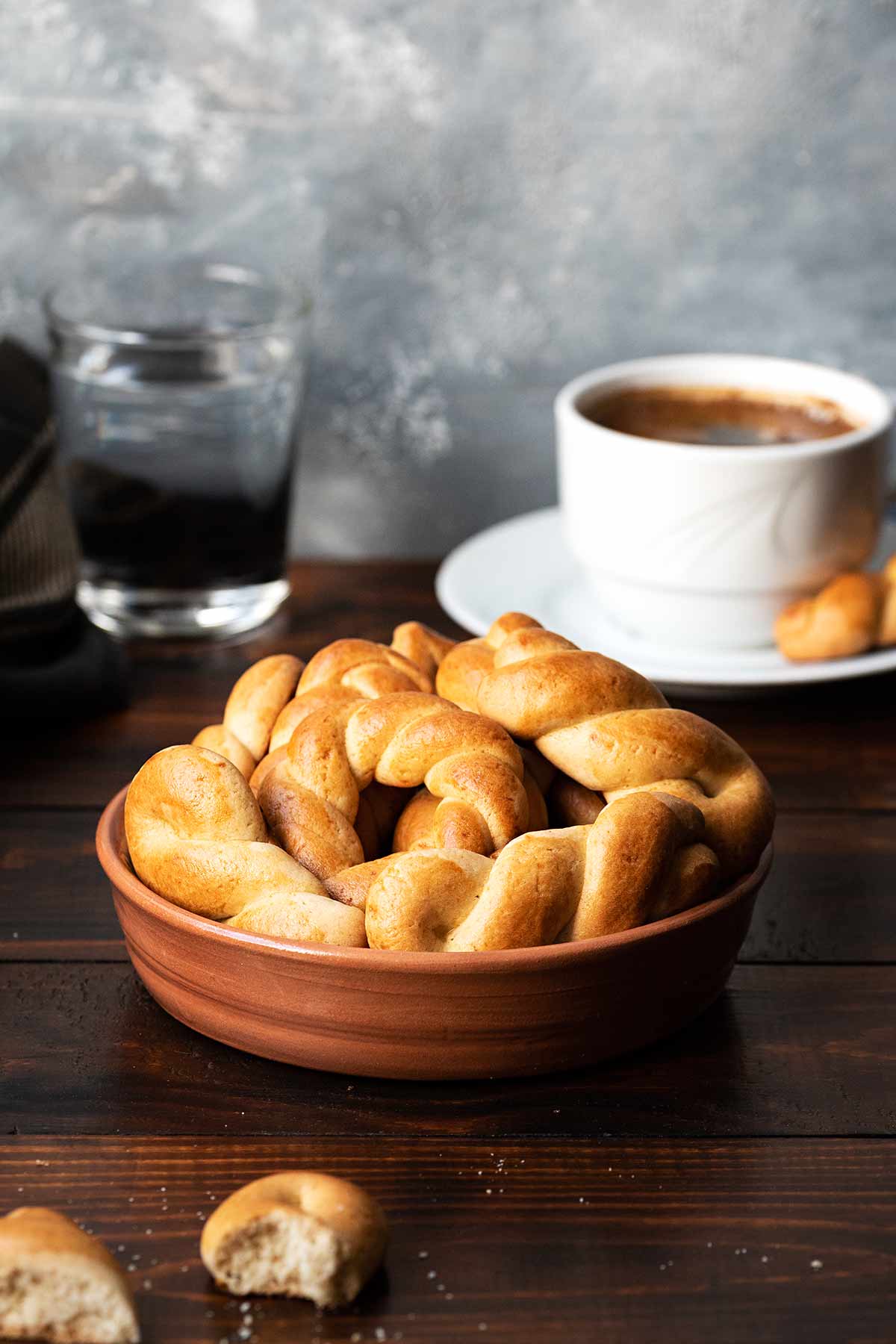
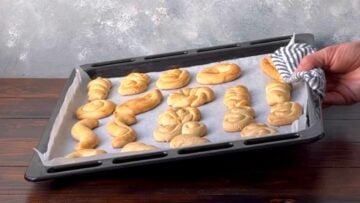
Koulourakia are traditional Greek cookies, commonly prepared on Holy Thursday, as part of the Orthodox Easter celebrations. Also known as smyrneika koulourakia, because the recipe has been passed down by the Greeks from Smyrna, they are characterized by their buttery flavor, subtle sweetness, and distinctive shapes such as braids, twists, rings, and spirals.
Not to brag, but my mom makes the best koulourakia! The only thing I changed in her recipe is that I used butter instead of margarine. Margarine makes them a bit more tender and melt-in-your-mouth, but with butter you get incomparable taste.
If you're looking for a fun activity to bring the whole family together, especially the kids, these butter cookies from Greece are the perfect choice! And with 12 different shapes to try, the fun never ends!
For more Greek cookie recipes, check out this Melomakarona recipe (honey spiced cookies), these buttery 'snowy' cookies called Kourabiedes, and the traditional double-baked Greek biscotti known as Paximadia or Kalorizika.
📋Koulourakia Ingredients
To make this koulourakia recipe you'll need the following ingredients:
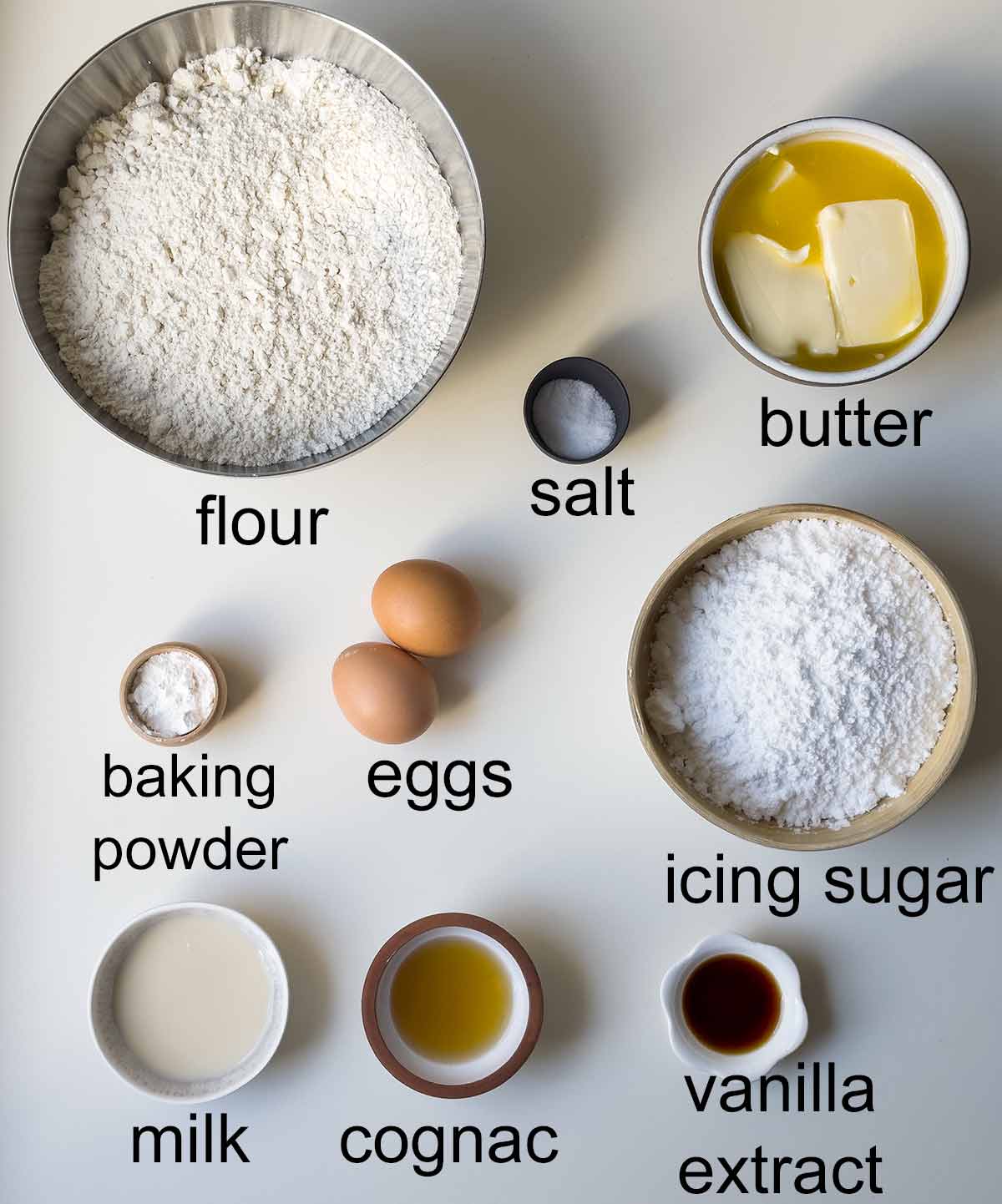
Butter: The star ingredient! It gives Greek cookies koulourakia their signature aroma and melt-in-your-mouth texture. Most of the times I use normal butter, but for the best results you should use clarified butter or ghee (in the ingredients photo, I accidentally warmed the butter for too long in the microwaves, but I let it cool before starting the recipe).
The old traditional recipes from Smyrna call for clarified sheep and goat butter (in Greece you find this in glass jars) which has a stronger smell. Margarine will also give the same texture as clarified butter, but the taste will be slightly different.
Sugar: I suggest using icing sugar because it will make the butter fluffy very quickly and it's so easy that you can even make them with a whisk. You can also use granulated sugar, but in this case, a hand mixer or stand mixer is needed to beat the butter and sugar mixture until it's pale and fluffy like buttercream.
What flour do you use for koulourakia?
Alevri malako (soft flour) is best for this recipe. This is a flour with lower protein content (8-9%). You can use cake flour instead or make your own with a mix of all-purpose flour and cornstarch (more about this in the notes section in the recipe card below.
If you don't have any cornstarch, you can still make them with all-purpose flour only.
Leavening Agents: Only baking powder is used in this modernized recipe mainly for ease. A touch of baking soda can also be used (especially if orange juice is added) but it can spread them too much and ruin the shape.
✏️ My mom used to make them years ago with baker's ammonia, but it smells weird during baking and makes them spread too much and lose their shape (especially when the amount is not precise enough). Alousia (ash water) is another traditional leavening agent but no one uses it any more.
Flavorings: These smyrneika koulourakia are flavored with vanilla extract which complements their buttery taste perfectly (vanillin will also work).
👉 Replace some of the sugar with homemade vanilla sugar for an incomparable vanilla taste.
👉 The alcohol from the Cognac (or Brandy) evaporates during baking.
Variations
With Orange zest: In Crete we generally don't use orange zest when making smyrneika koulourakia which we also call biscuits or tsourekakia (not to be confused with Tsoureki, the Greek Easter Bread).
Other flavours: Occasionally, ouzo, ground mastic (wikipedia link), ground mahleb, or ground cinnamon and cloves are used as additional flavorings.
👉 How to use mastic: Ground 2-3 tears of mastic in a mortar with 1-2 tablespoons of sugar until it becomes powder and add it to the sugar and butter mixture.
Sesame Seeds: Traditional Greek Easter cookies don't usually have a sesame seed topping, but other twisted Greek cookies have. If you like you can certainly sprinkle some sesame seeds after you brush the cookies with the egg wash.
🔪 How to Make Greek Easter Cookies
This is a short guide for how to make easy koulourakia cookies. For the detailed instructions with step-by-step-photos, please see the recipe card at the end of this post.
- Cream butter and sugar: Beat the mixture very well until it turns light and fluffy (like the fluffiest buttercream).
- Add the liquids: Mix in the milk, the cognac and the vanilla extract.
- Add the eggs: Mix in the eggs one at a time.
- Combine dry ingredients: In a separate bowl, whisk together your flour and baking powder and slowly incorporate them into the wet mixture.
- Rest the dough.
- Shape the Greek butter cookies.
- Brush with egg wash.
- Bake until golden brown.
✏️ In Crete, some recipes call for transferring the warm cookies into a basket lined with lemon (or bitter orange) leaves and blossoms. They are then covered with a clean towel and left to cool, giving them a unique aroma. If you want to try this, be sure to rinse and dry the leaves thoroughly.
👨🍳 Expert Tips
✅ All the ingredients should be at room temperature and the softened butter easily squashed with your finger.
✅ Place cold eggs in a bowl filled with cold water to bring them to room temperature very quickly.
✅ Use fresh baking powder.
✅ Don't add all the flour at once, but reserve a few tablespoons. Different flours absorb different amount of liquids, so you may not need all the flour stated (or you may need a bit more).
✅ The role of flour in Koulourakia: Flour affects both texture and workability. More flour makes the dough easier to shape but results in firmer cookies. Less flour ➡️ tender, melt-in-your-mouth cookies.
If shaping becomes difficult, add a little extra flour-but know that it may slightly change the texture. Don't stress too much, though! The joy of baking is in the process, not just the result.
🔧 Troubleshooting
1. Dough Too Sticky?
Ensure precise measurements by using a kitchen scale. Let the dough rest for 10-15 minutes more and after that, if needed add a tablespoon of flour at a time until it's just right. Try to avoid over-kneading.
2. Cookies Spreading Too Much?
This usually happens if the flour isn't enough or if the baking powder (or baking soda) is too much. Add 1-2 tablespoons of flour to the dough or chill the shaped cookies for 15 minutes before baking to help them hold their shape better.
3. Luck of Flavor?
Using bad quality vanilla extract can result in blunt flavor. If you make them with orange zest, the type of orange can affect the intensity of the aroma. Always smell the mixture after adding the aromatics and if the aroma seems weak, add a bit more. The same goes with vanillin capsules; Some brands contain much more vanillin per capsule than others.
♾️ Koulourakia Shapes Guide
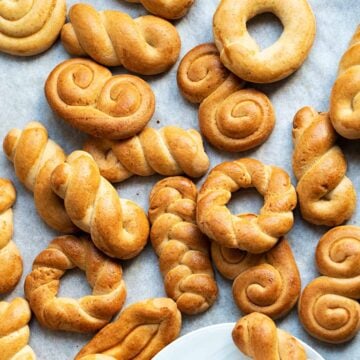
Every year, Greek families gather before Orthodox Easter to bake huge batches of koulourakia cookies, sharing stories and laughter. Traditionally these Greek butter cookies are shaped by hand and twisted into braids, spirals, or rings.
The most common shapes, as shown in the image below, are:
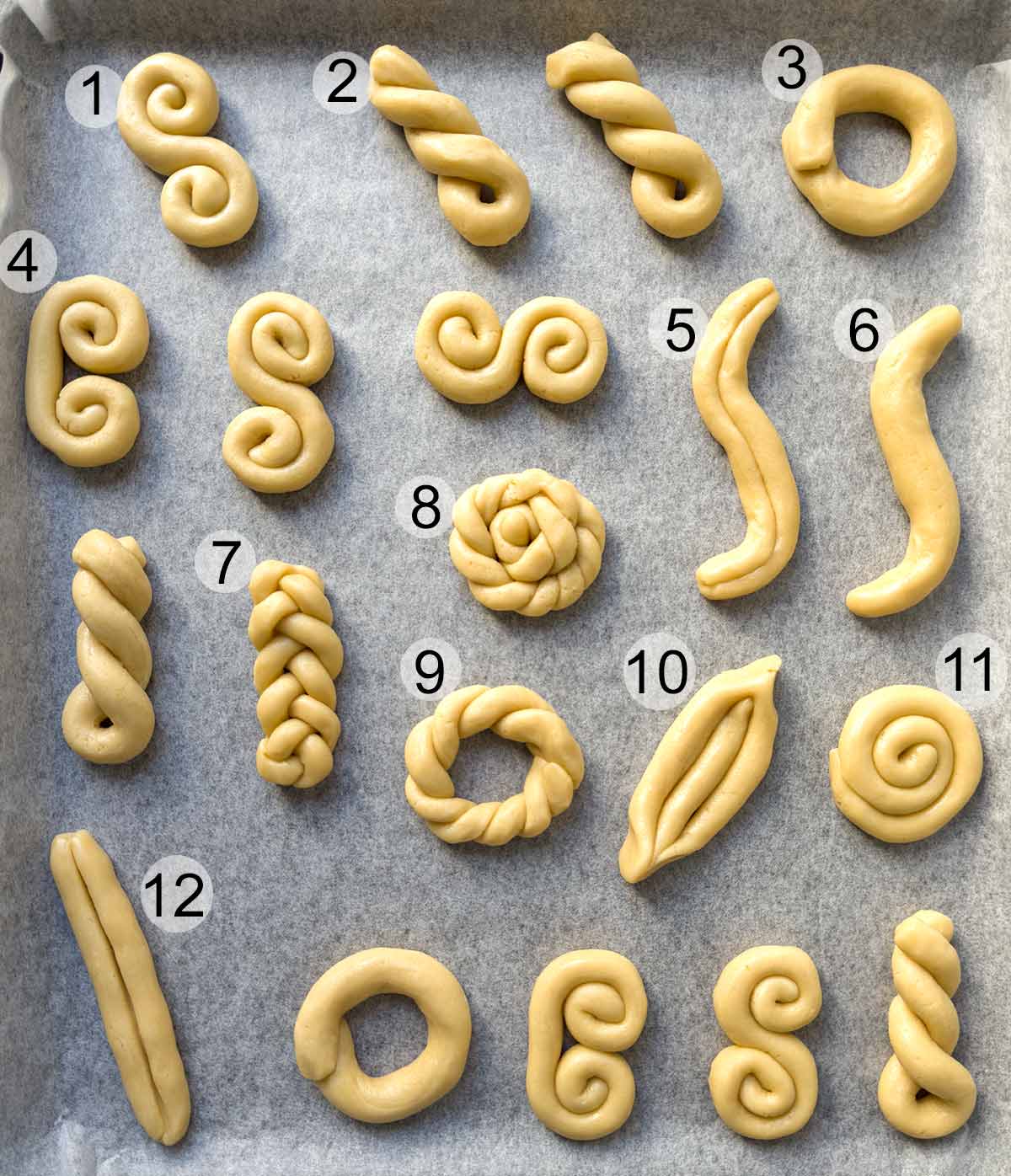
1. Opposite Spirals: Roll a piece of dough into a string and roll each end into a spiral with opposite directions.
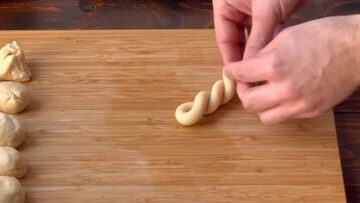
2. Twists: This is the typical shape of Greek biscuits. Roll a ball of dough into an 8-inch (20 cm) long rope, fold it in half, and twist the edges together. Place on a baking sheet about 1 inch apart.
3. Rings: Roll a piece of dough into a string and then form a circle by joining the ends.
4. Double snails or eyeglasses: Roll both ends of a string inwards, into spirals.
5. Double S: Form a thick string, score it in the middle with the back of knife (don't cut all the way through) and form an "S". This is my mom's favorite shape (hers look prettier than mine).
6. Simple S: Roll a thick string of dough and shape into an "S".
7. Braid (difficult): Braid three thin strings of dough. This one needs a bit of practice.
8. Twisted spiral (medium difficulty): Make a long and very thin twist shape (#2) and roll it into a spiral.
9. Twisted ring - wreath (medium difficulty): Form a long, thin twist shape (#2) and join the ends forming a circle.
10. Boats: Form a long string of dough, fold it into thirds, and pinch the edges with your fingers.
11. Spiral: Roll a thin string of dough into a spiral.
12. Small baguettes: Roll the dough into an oblong shape and score the middle with a knife.
For the shapes 1, 2, 4, 10 and 11 you'll roll out the dough into a long rope - approx. 8 inches (20cm).
For shapes 3, 5, 6 and 12 you'll roll the dough a bit shorter, about 5 inches (13cm).
For the shapes 7, 8, 9 you'll roll the dough a bit longer, about 10 inches (25.4cm).
🍳 More Cookies to Try



Now that you know the secrets to making the best koulourakia recipe, it's time to get baking! If you tried this easy Koulourakia Recipe, please leave a 🌟 star rating and let me know how it went in the 📝 comments below. I love hearing from you!
🎥Koulourakia Video
Music on video: Dayspring Musician: Firefl!es
📖 Recipe
Koulourakia: Greek Easter Cookies Recipe
Ingredients
For the Cookie Dough:
- 1.1 cups (250 g) butter (softened, see note#1)
- 2 cups (200 g) icing sugar (see note#2)
- 2 tablespoons (30 g) whole milk (or orange juice)
- 2 eggs (large, at room temperature)
- 1 tablespoons (15 g) cognac (or brandy, see note#3)
- 1.5 teaspoons vanilla extract (or vanillin capsules)
- 2.5 teaspoons (12.5 g) baking powder
- 1 pinch salt
- 5 cups (600 g) soft flour (see note#4)
For the egg wash
- 1 egg
- 1 tablespoon (15 g) milk
- 1 pinch sugar
Instructions
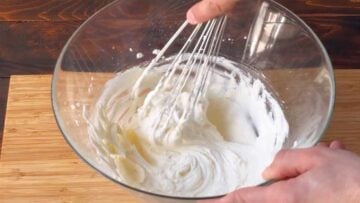
- Transfer the butter and sugar to a large mixing bowl and beat very well until it turns light and fluffy (like the fluffiest buttercream). You can do this with a whisk, a hand mixer or a stand mixer with the whisk attachment.⚠️ Don’t rush this step! The air incorporated here makes for light, crisp cookies.

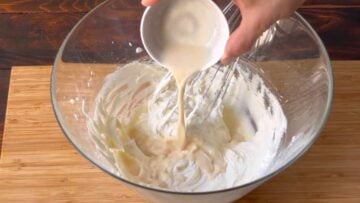
- Mix in the milk, the cognac and the vanilla extract until homogenized.
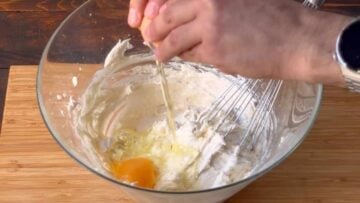
- Mix in the eggs, one at a time, until fully incorporated. Stop and scrape down the bowl as needed.
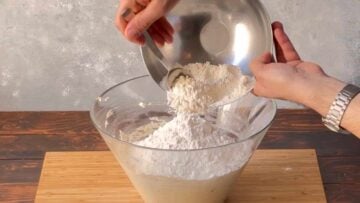
- In a separate bowl, whisk together the flour and baking powder and slowly incorporate them into the wet mixture (reserve a few tablespoons of flour and add them only if the mixture is very sticky). Mix until a soft, slightly sticky dough forms.Use a rubber spatula or the paddle attachment of your stand mixer and a low speed. ⚠️ Avoid over-kneading or they'll be tough.
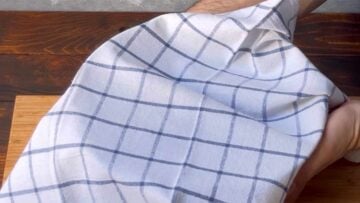
- Cover the bowl with a clean towel and rest for 30 minutes. If it's hot you can also rest them in the refrigerator. This will give the flour time to absorb all the moisture.⚠️ Resting the dough will help you shape the koulourakia much easier.
- Preheat the oven to 350°F or 175°C (not fan-forced), and line 2 cookie sheets with parchment paper.Pinch off enough dough to form a 1-inch ball, about 0.88 oz or 25 grams. Roll it into a rope. Form your desired shape and transfer onto the baking sheet. If the dough gets too soft to roll, chill again until firm enough to handle.👉 I prefer to use a scale so that all the cookies weigh the same. This means that all will bake evenly.👉 For all the shapes please refer to the Koulourakia Shapes Guide above.
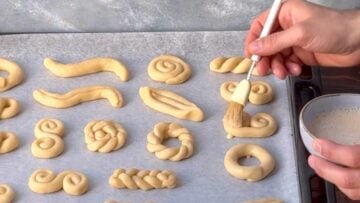
- In a small bowl, beat the egg, milk and sugar together until well combined. Brush the egg wash over each cookie.
- Bake for 25 to 30 minutes or until the cookies are golden brown.Traditionally (and rightfully), these cookies are baked until completely dry (they last longer this way). For softer koulourakia, bake them for 18-20 minutes.Let the cookies cool on the baking sheet for a few minutes, then transfer to a wire rack and cool completely. Store in an airtight container for up to 2 weeks.
Notes
More Greek Easter Recipes:
Nutrition
💭 FAQs
Storage:
Store at room temperature in an airtight container because they hate moisture! When stored properly, they'll keep for at least two weeks.
Freeze baked koulourakia for up to 3 months in a well sealed food bag. Let them thaw at room temperature before enjoying. To refresh them, warm them in the oven at 300°F (150°C) for a few minutes to bring back their crisp texture!
On Holy Thursday Greeks dye eggs and make Tsoureki and Koulourakia. Some people make Koulourakia from the previous day to have more time for the tsoureki an the died eggs the next day.
According to the Orthodox tradition, no household chores should be made on Holy Friday.
Holy Saturday is the day when the Easter dinner is prepared and desserts with cheese like Cretan kalitsounia (sweet cheese pastries).
Greeks make koulourakia for tradition, family, and celebration - especially during Easter. These buttery, twisted cookies have been part of Greek Orthodox Easter customs for generations.
Why Are Koulourakia Important?
1. Easter Tradition - They're baked in the days leading up to Easter Sunday, often on Holy Thursday, as part of Greek Easter preparations. It's believed that preparing koulourakia casts away bad spirits, making it more than just a baking tradition-it's a ritual for good luck.
2. Symbolism - Their twisted shapes represent eternity and renewal, tying into the spiritual meaning of Easter.
3. Family Bonding - Making koulourakia is a social activity, with families (especially children) gathering to shape and bake them together.
4. Hospitality - Greeks love offering koulourakia to guests with a cup of coffee or tea, reflecting the country's deep-rooted hospitality.
5. Longevity - Unlike other Easter treats, koulourakia stay fresh for weeks, making them perfect for sharing and gifting.
While koulourakia are most popular during Easter, many families enjoy them very often and bakeries sell them year-round!
What is the difference between Koulouria and koulourakia?
Koulouria (Κουλούρια) are large, savory, bread-like rings, sprinkled with sesame seeds (similar to Turkish Simit). The most famous type is koulouri Thessalonikis, a crispy, chewy Greek street food similar to a sesame bagel.
Koulourakia (Κουλουράκια) are small, sweet, and buttery cookies. They are twisted or shaped into braids, rings, or spirals and have a crisp yet tender texture.
While both words share the same root (from the Greek word "kouloura" meaning "ring" or "coil"), koulourakia are cookies, and koulouria are bread rings.
Here are some of the best ways to enjoy them:
With a glass of milk for breakfast. For an extra treat, dunk them in hot, milky coffee!
As a snack or a quick bite on the go.
With a cup of Greek coffee, your afternoon Greek mountain tea or this easy Chai Latte Recipe with Tea Bag.


Nicole says
perfect combination with coffee or milk or i can just eat them all in one meal!😊
Teresinha says
Hi , if I double the recipe What should I do for soft flour?
Thank you.
Makos says
Hi Teresinha, you can use 9 cups all purpose flour and 1 cup corn starch or 1100 grams all purpose flour and 100 grams corn starch.