
Ever tried making a taramasalata at home, only to end up with a dip that's too salty or not creamy enough? You're not alone! Crafting this traditional Greek fish roe dip can be tricky, but with a few simple tweaks, you can avoid common pitfalls and create a perfect, silky taramosalata every time. In this post, I'll share some expert tips and fixes for the most frequent mistakes, ensuring this meze dish is always a hit.

What is Taramasalata?
Taramasalata (also spelled taramosalata) is a traditional Greek dip made from tarama (fish roe), usually cod or carp. It's also known as Greek caviar dip or Greek pink sauce. Its silky texture and tangy flavor make it a standout. Plus, it's incredibly versatile - perfect as a spread on warm Lagana bread (you can also use homemade pita bread instead) or as a dip for fresh veggies.
Taramasalata is very popular during Orthodox Lent and is a staple on the table, especially on Clean Monday (Kathara Deftera). It is traditionally served alongside other Lenten dishes like fried zucchini chips and seafood specialties such as Mediterranean baked octopus and simple cuttlefish stew.
If you're addicted to Greek dips, don't miss this homemade tzatziki sauce (the classic recipe plus two variations), my favorite Greek spicy feta dip (Tirokafteri) and a gluten free variation of taramosalata without bread (Greek tarama mousse) which is basically a mayonnaise made with fish eggs.
📋 Taramosalata Ingredients
Taramasalata is made of a few simple ingredients making each bite a testament to the simplicity and depth of traditional Mediterranean cuisine. These ingredients are:
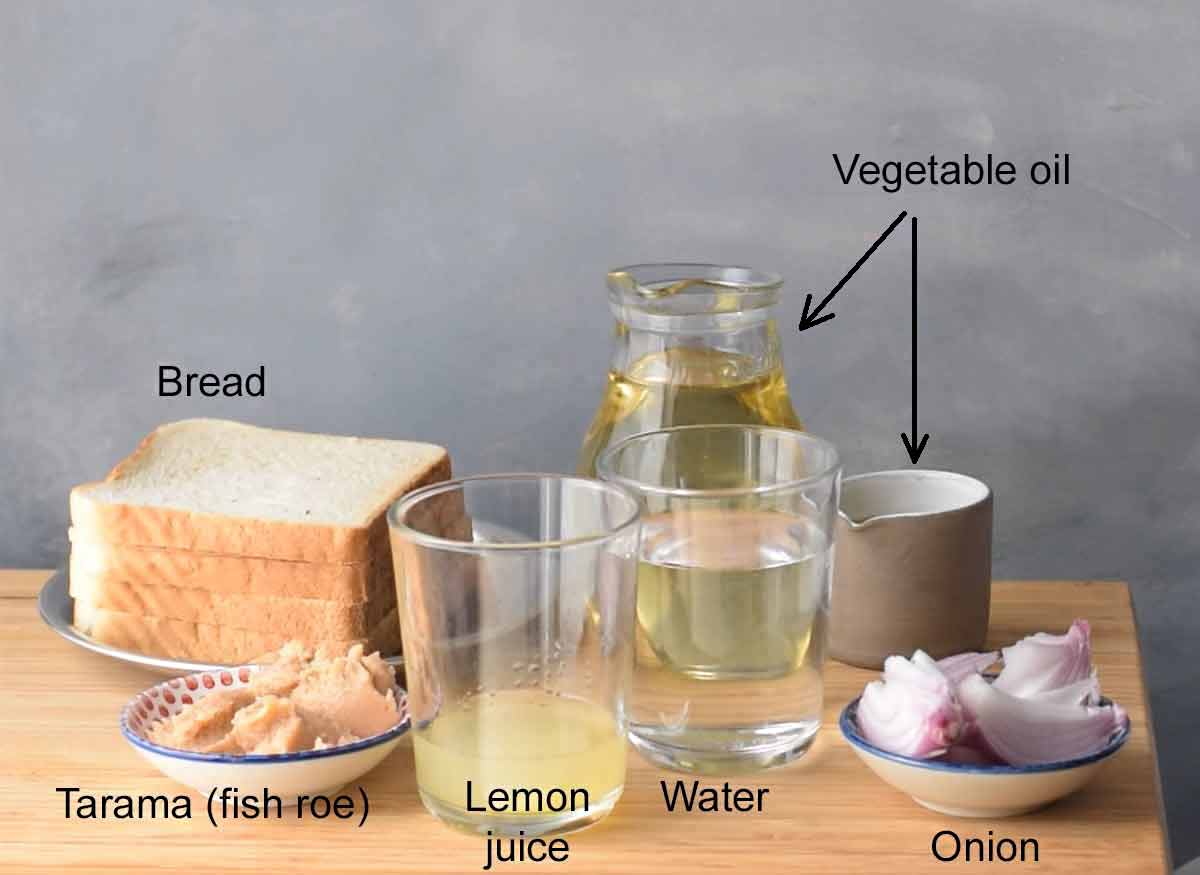
Which is the best tarama?
Tarama is the Greek word for roe (tiny fish eggs). It's usually from carp, cod, pollock or mullet and it is the main ingredient of taramasalata. But beware: not all tarama is created equal.
In Greece, you'll find two types: white and pink tarama.
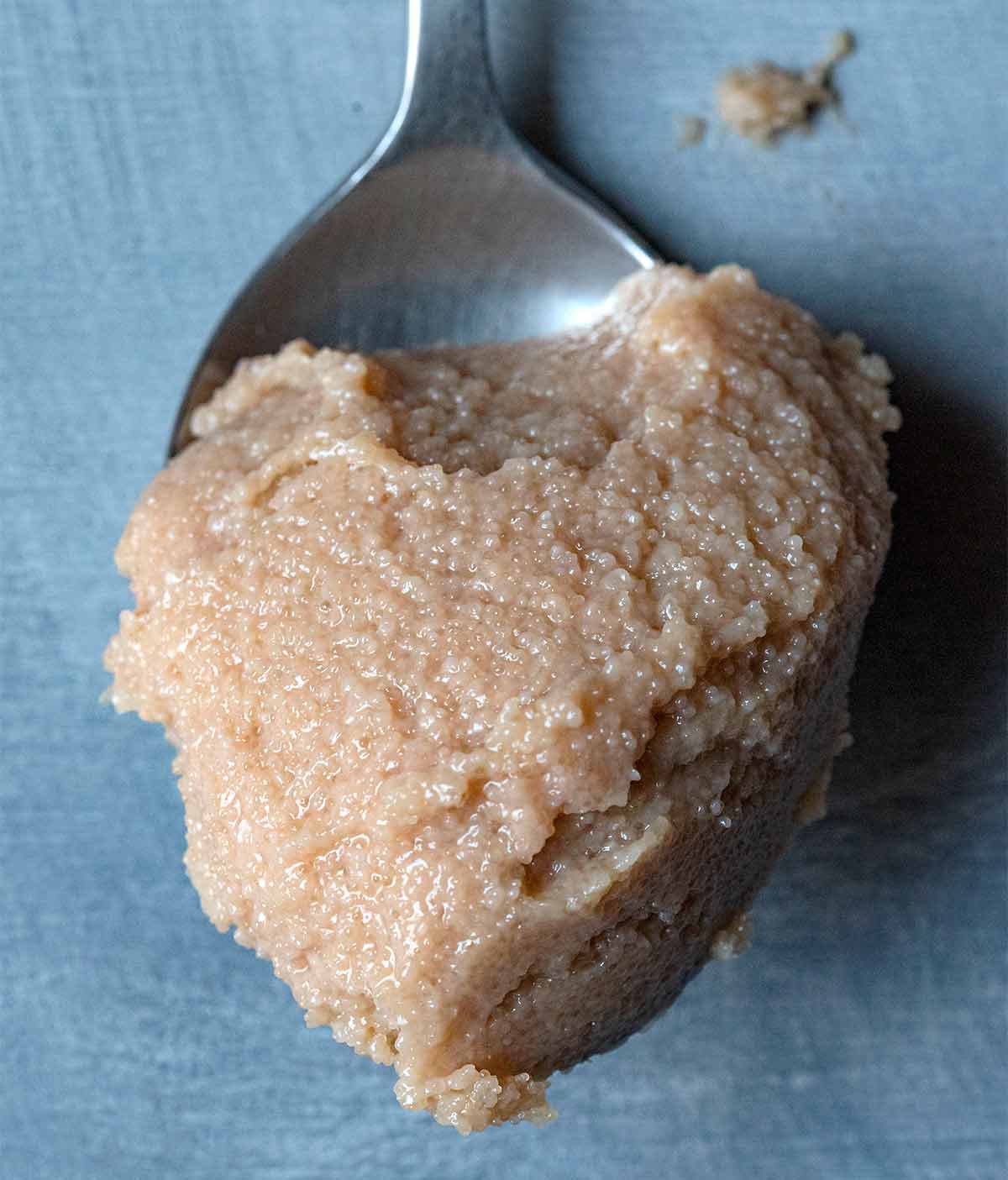
White tarama is considered the best quality (the color is actually light beige). It's undyed and pure, offering a more authentic flavor. However, it may be tricky to find outside of Greece.
Pink tarama, in many cases, has added color (possibly because some find it more visually appealing) and may also contain other additives, meaning it's not purely fish roe and salt. It will produce a tarama dip with the classic pink color but the taste will be inferior.
If you want to read more about tarama you can visit this tarama and taramasalata article (by dianekochilas.com).
What oil to use in Taramasalata?
Olive oil has a strong flavor and will overpower the tarama. It can also make the taramosalata taste bitter. That's why, contrary to what many believe, a neutral tasting vegetable oil should be used in this recipe. Sunflower oil or corn (maize) oil are ideal. If you want, you can add just a tiny amount of olive oil.
What bread to use for taramasalata?
Traditionally, stale bread is used, but I prefer to make it with fresh bread because it becomes more creamy. If the bread is crusty, you should remove the crust.
White sandwich bread is a great option because it's softer, with mild flavor and makes the fish roe dip very creamy and silky smooth.
🔪 How to make taramasalata
Making taramosalata dip at home is easier than you think. In just a few steps, you can whip up a dip that's as good (if not better) than what you'd find in a Greek tavern. And the best part? You control the flavor. Want it more tangy? Add an extra squeeze of lemon. Prefer it creamier? A little more oil will do the trick!
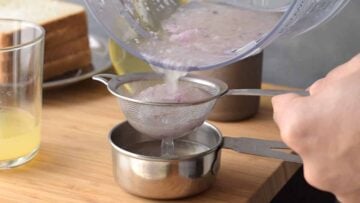
Step 1: Transfer the onion and the water to a food processor or mini chopper and process well. Strain the mixture through a fine strainer (this is optional but makes the taramasalata lighter than using the onion whole).
Step 2: Add all the ingredients except from the oil to the food processor and blend until everything is smooth.
Step 3: With the machine running, add the oil in a thin stream.
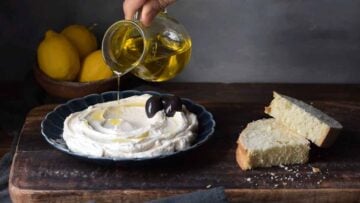
Step 4: Taste and adjust the lemon juice, the oil and the salt if needed. Serve with black olives and a drizzle of extra virgin olive oil.
✏️ Note: The traditional way for how to make taramasalata recipe is to soak stale bread (with the crust removed) with cold water and squeeze it to remove the extra moisture. However, this way you can't really now how much water you've used. That's why I add the bread and the water separately, after I've weighted them.
👨🍳 Expert Tips
These are the most common mistakes and how to fix them:
✤ Fish roe not broken down completely: When making a taramasalata recipe, it's important to break down the fish roe very well, otherwise you'll be able to see the tiny eggs dispersed throughout the dip. To avoid this, make sure you process the roe with the bread and the water very thoroughly, before you start adding the oil.
✤ Too salty: It's very difficult to know beforehand if the tarama is too salty. Once you make the taramasalata and it tastes saltier than you like, add more bread, oil and lemon juice to compensate for the saltiness.
If you already know that your tarama is very salty (say you've made one batch before with the same tarama), you can soak it in cold water for 30 minutes to remove some of the salt.
✤ Too bitter: This can happen if you use too much olive oil. Olive oil has intense flavor and can alter the flavor of taramasalata or make it taste bitter. That's why I suggest using a neutral tasting vegetable oil and if you want to add olive oil add just a small quantity.
✤ Too tangy: The acidity of the lemon cuts down the greasiness and provides freshness, but too much can be overpowering. My mom always makes this mistake, but I guess she likes it this way. Remember that there's no need to add all the lemon juice from the start. Add a small quantity at first, taste at the end and if you want it more tangy, add more lemon juice gradually until you get it perfect.
✤ Too loose: When you start adding the oil, the mixture will be thin but it will start to thicken and become creamy as you add more oil. So, keep adding oil until you get the desired consistency.
✏️Top Tip: The oil should be added gradually and in small quantities each time, or the taramosalata may separate and become loose and grainy.
✤ Bland taste: This usually happens when the tarama is low quality. The only fix for this problem is to try and get a good quality fish roe. It may be more expensive but it's worth it and a little goes a long way!

What to do with taramasalata
Wondering how to serve this Greek fish egg dip? It's a perfect companion for a Greek meze platter, alongside olives, seafood and grilled vegetables. It also pairs beautifully with crisp white wine or ouzo, making it a staple for any Greek-inspired feast.
These are some of the foods you can eat taramasalata with:
💭 FAQs
Taramasalata is full of umami flavor. It has a rich, creamy texture and a unique, savory flavor. It's slightly tangy and salty, with a subtle brininess from the fish roe. The lemon juice adds a refreshing zing and the hint of onion compliments its savory flavor. Overall, taramasalata is a delightful balance of creamy and tangy, making it a standout in any Mediterranean spread. Another way to describe it is a "fishy" mayonnaise but in a good way!
Leaving it in the fridge overnight will let all the different flavors to mature and blend together better.
Tarama is the Greek word for fish roe and salata means salad. So in Greek, it means "fish roe salad". This is because sometimes in Greek the meaning of the word salad can be extended to include spreads and dips that have a lot of ingredients blended together.
Taramasalata is often pink because some varieties of tarama (fish roe) used in the dip are dyed with food coloring. Naturally, fish roe can range from pale beige to light pink, but to make the dip more visually appealing and consistent in color, food coloring is sometimes added, particularly in commercial preparations. The pink color is not indicative of the quality or taste but rather a visual enhancement that some consumers find more attractive. In contrast, traditional or homemade taramasalata often uses white tarama, resulting in a more natural, pale-colored dip.
Taramasalata can last approximately 5-6 days when stored properly in the refrigerator. To ensure it stays fresh, store it in an airtight container.Always check for any off smells or changes in texture before consuming, as these can indicate spoilage.
🍳 More meze dishes

🎥Recipe Video
📖 Recipe
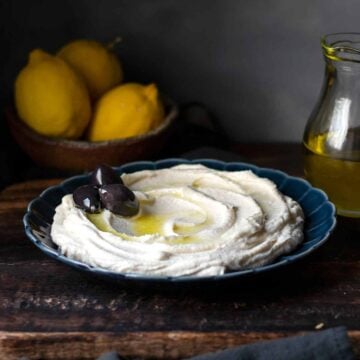
Greek Taramasalata (Traditional Fish Roe Dip)
Ingredients
- ½ cup (120 g) water
- ½ (60 g) red onion (optional - see note #1)
- 4 slices (100 g) white bread (see note #2)
- 3 tablespoons (45 g) white tarama (fish roe) ( see note #3)
- 2 tablespoons (30 g) lemon juice (freshly squeezed, you may need more)
- ¼ cup (55 g) extra virgin olive oil (mild - see note #4)
- 1 cup (230 g) sunflower oil (or corn oil)
Instructions
- Transfer the onion and the water to a food processor or mini chopper and process well. Strain the mixture through a fine strainer into a bowl and discard the onion pieces.*This step is optional. You can use the onion as is. However, using only the onion water makes the taramasalata lighter.

- Transfer the bread, the tarama, the onion water, the lemon juice and the olive oil to a food processor and blend until everything is smooth.
- With the machine running, add the oil in a thin stream. As you add the oil the mixture will start to thicken (it's the same thing as making mayonnaise). Scrape the bowl with a spatula and process for one more minute.
- Taste and add more lemon juice if needed. If it tastes too salty, add some more oil. If it's not salty enough, add some salt. Serve with black olives and a drizzle of extra virgin olive oil.


Vicky says
It came out very light and creamy, one of the best I have made so far
Makos says
That's great! Thanks
Staci says
Studied multiple recipes and made this one due to the onion water step to have a milder onion flavor. This step only took like 30 seconds and was worth it. I did make the mistake of using all olive oil (because I thought I knew best) which it still tasted amazing but a little strong on the olive. I also only used 1/2 the oil recommended in the final step and the consistency is light & creamy. Reminds me of Greece!
Makos says
Hi Staci, thanks for trying this! You can actually omit the onion completely, it will still taste great!
Angie says
The best Taramosalata ever! And the trick with the onion water is very clever, thanks for this recipe
Makos says
Thank you so much Angie!